EDUCATIONAL GAME ABOUT HYGIENE CONCEPTS
CMU ETC 2024 FALL PROJECT
DURATION
14 weeks
Narrative Design
Level Design
UI/UX Design
2D Art
The StepUp team developed the game, Hygiene Hero Cup, which focuses on engaging students with fun, educational challenges centered on proper handwashing, foot care, and the importance of wearing shoes. Designed for students in underserved areas, the game’s sports game-style competitions and fantasy adventure themes will make learning both fun and impactful.
Contributions: I designed the full narrative of the game, beginning with target audience research to ensure cultural and educational relevance. To support art direction, I created multiple sketches that guided the 2D and 3D artists. I also developed the level design in Unity, collaborating closely with the programmer to refine gameplay mechanics. Additionally, I conducted user research and playtesting with the target audience to validate engagement, and I designed the game’s UI to ensure a seamless user flow from the beginning to the end of the experience.
Fully functional Tablet Game app
1 Producer
2 3D Artists
1 UI/UX Designer
1 Programmer
World Shoe Fund
ROLES
DELIVERABLES
TEAM
CLIENT
OVERVIEW
3D interactive game for Android tablets aimed at reinforcing hygiene education.
DESIGN PROCESS
Research
Ideation
Design Decisions
Wireframes
User Testing
Final Prototype

🎬DEMONSTRATION VIDEO
The World Shoe Fund is a social enterprise focused on improving global health by distributing shoes to those in need, particularly in regions where access to footwear is limited. The organization’s mission is to combat the health risks associated with being shoeless, such as infections and injuries, by providing durable and practical shoes to vulnerable populations. In addition to giving away shoes, the World Shoe Fund emphasizes promoting hygiene education to encourage recipients to adopt and maintain hygienic behaviors in their everyday lives.
The main barriers to tackle in this project include a low perception of risks and lack of belief in consequences, as many children are unaware of the long-term impact of poor hygiene. The relevance of content is another challenge, since lessons may not reflect their real-life environment or needs. Insufficient reinforcement at home or school makes it easy for students to forget hygiene practices, while a lack of motivation or incentives limits engagement, as kids aged 10–14 respond best to fun, achievement, and recognition.
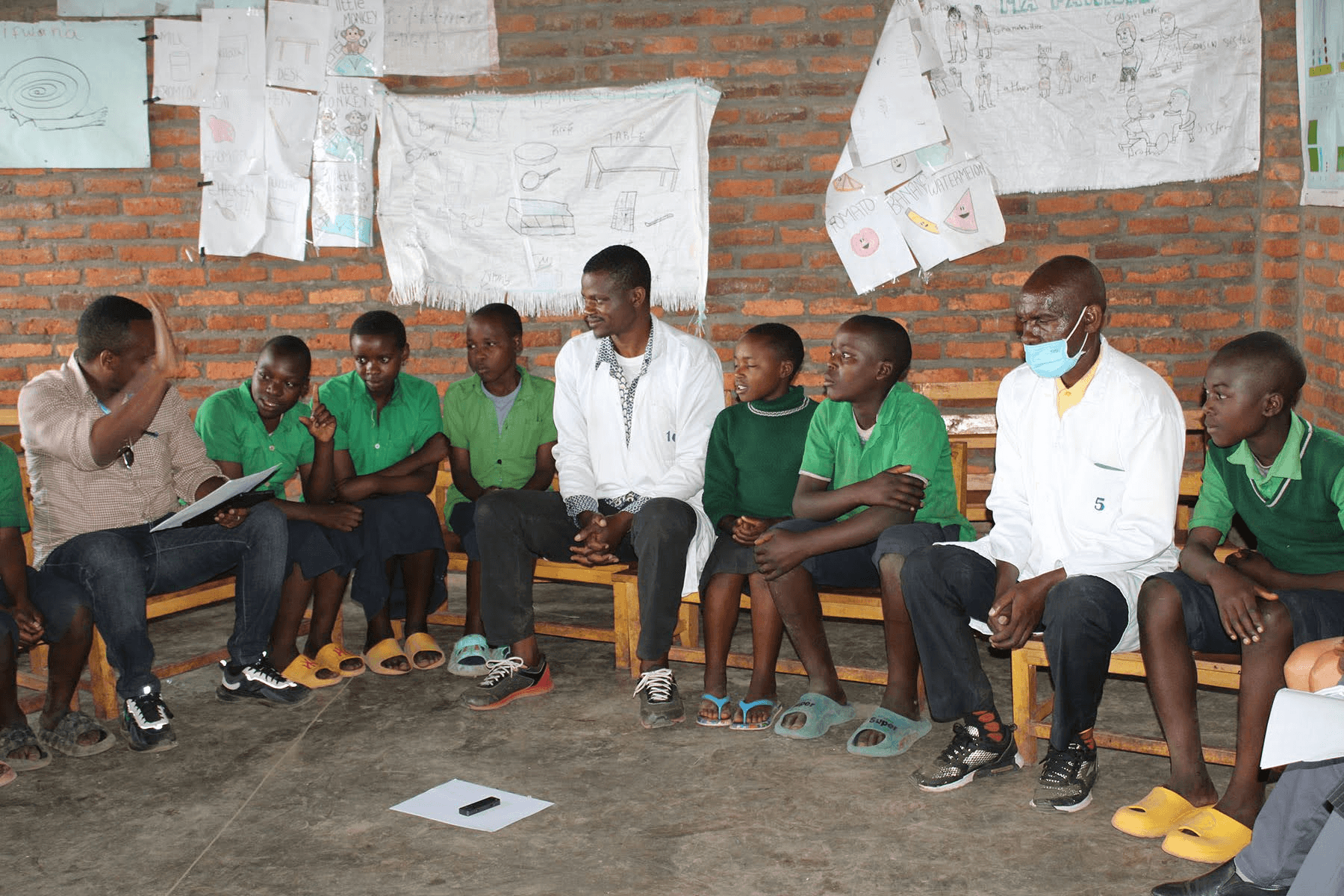
I conducted SME (Subject Matter Expert) interviews with professionals in public health, environmental practice, education, entrepreneurship, and game development to better understand Rwanda’s cultural, social, and educational landscape. Through these conversations, I gained insights into local hygiene challenges, learning behaviors, and motivational factors that influence children’s engagement. This research informed my design decisions, allowing me to create a contextually grounded and culturally relevant educational game that promotes lasting hygiene awareness and behavior change.
Children in Rwanda learn basic hygiene concepts in school,
but struggle to sustain healthy habits because current education is not engaging, motivating, or culturally relevant.
Hygiene is often taught as a set of rules, not an experience. Students rarely see the risks or consequences clearly, and classroom-only instruction doesn’t translate into daily practice. Without interactive tools, cultural resonance, rewards, or repetition, children find it difficult to stay motivated and develop lasting hygiene behaviors. To support meaningful transformation, hygiene education must connect to their culture, emotions, and everyday lives—while empowering teachers in resource-limited environments.
The Wash & Wear program is a global health and hygiene campaign launched by the World Shoe Fund in partnership with UNICEF, designed to promote cleanliness, dignity, and disease prevention in underserved communities.
Our target audience is students aged 10 to 14 years old. After receiving shoes distributed by the World Shoe Fund, these students participate in a hygiene education workshop organized at their schools. Following the lecture, teachers provide tablets for the students to engage with an educational game that reinforces hygiene practices.
Hygiene Station
Teaches and practices proper hygiene techniques to encourage the adoption of UNICEF’s WASH principles.
01
Health Services
Provides vaccinations and nutritional support to control disease and hunger through professional healthcare delivery.
02
Foot Washing
Promotes hygiene as an act of respect and dignity, inspiring communities through shared care and empathy.
03
Protective Footwear
Distributes durable shoes to prevent injuries, reduce infections, and improve access to education and employment.
04
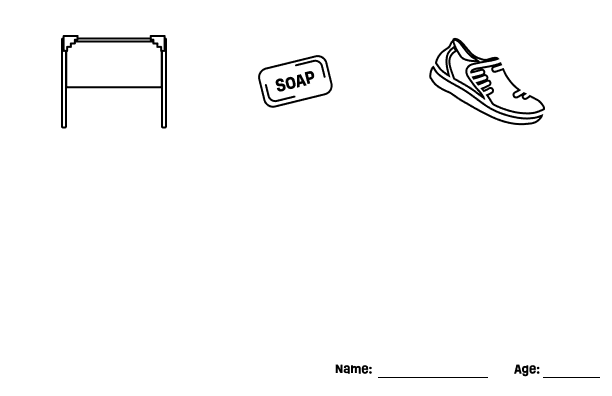
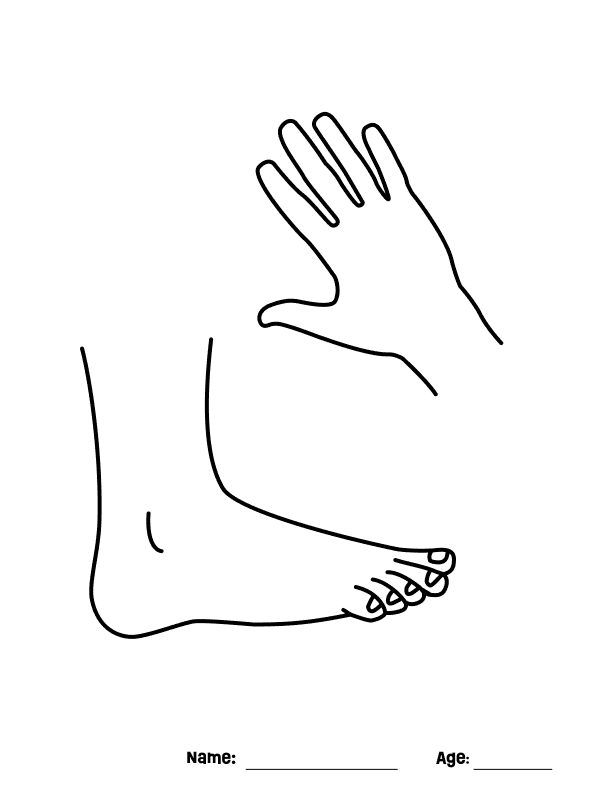
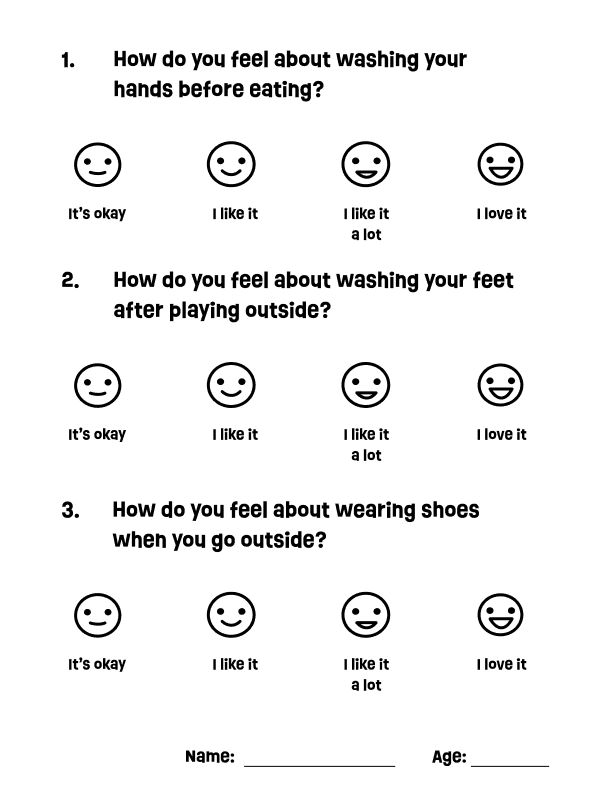
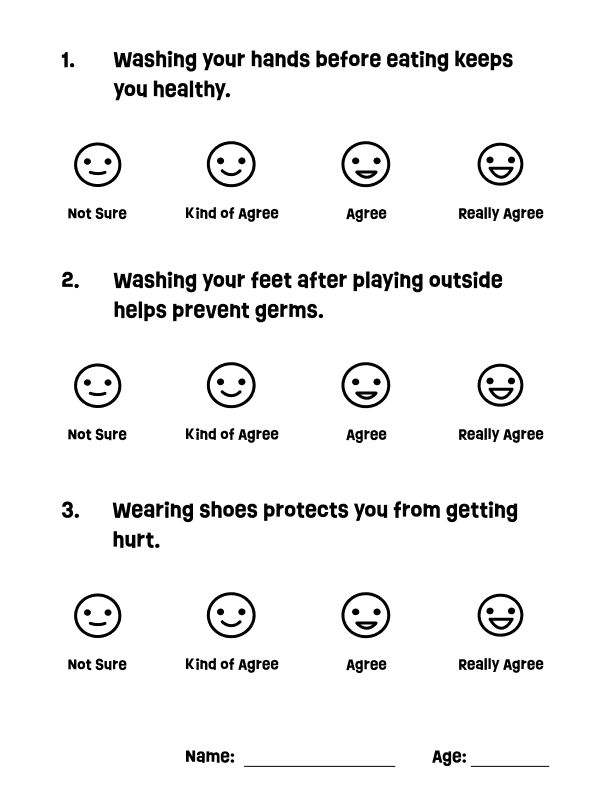
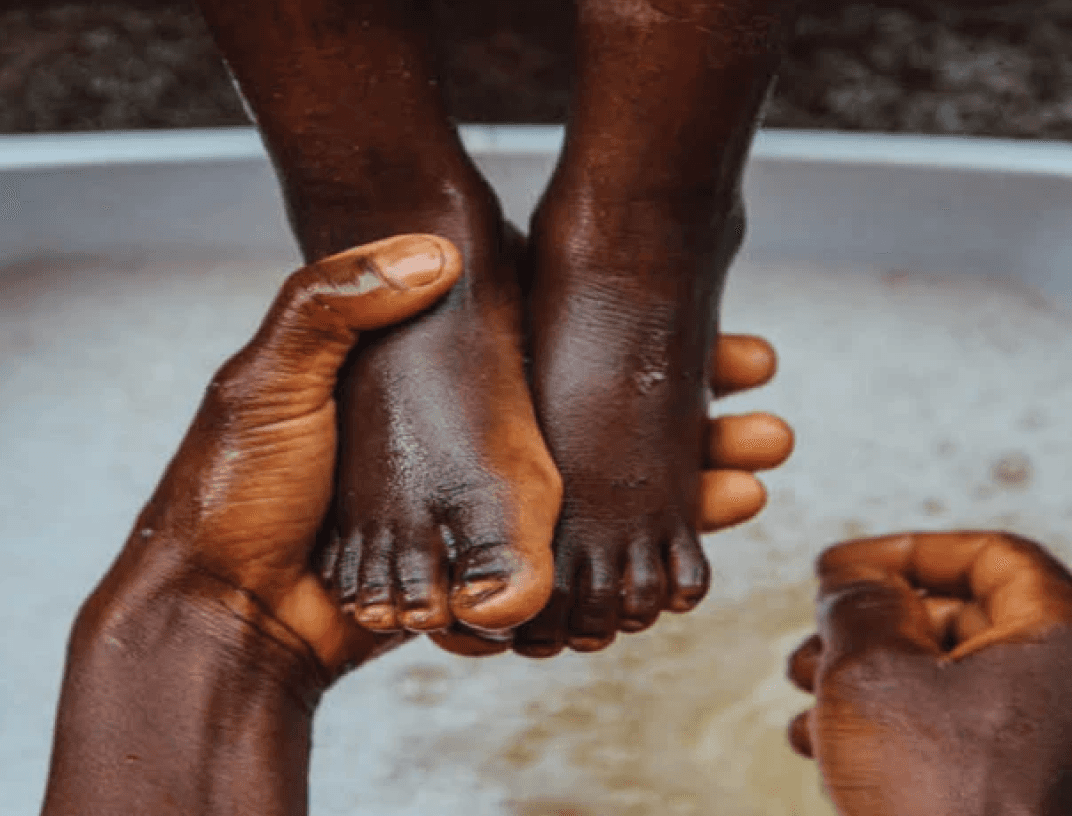
To begin, we introduced a creative pre-activity where students were asked to imagine: “What would someone’s hands and feet look like after playing outside all day without wearing shoes?” Each student received a worksheet with hand and foot outlines to draw their ideas, followed by three short Likert-scale questions on the back to capture their initial perceptions about hygiene. This pre-activity provided a clear baseline of what students already understood and believed before engaging with the game.
After the pre-activity, students moved on to the game itself. Once they finished playing, we repeated the same structure in a post-activity to observe any immediate changes in their understanding or perceptions. We also incorporated a short co-design exercise to learn what players expected from the game. Students described how they would explain the game to friends and family and shared ideas for additional features or improvements. This process helped us better understand what they gained from the experience and how the game could evolve to better meet their needs.
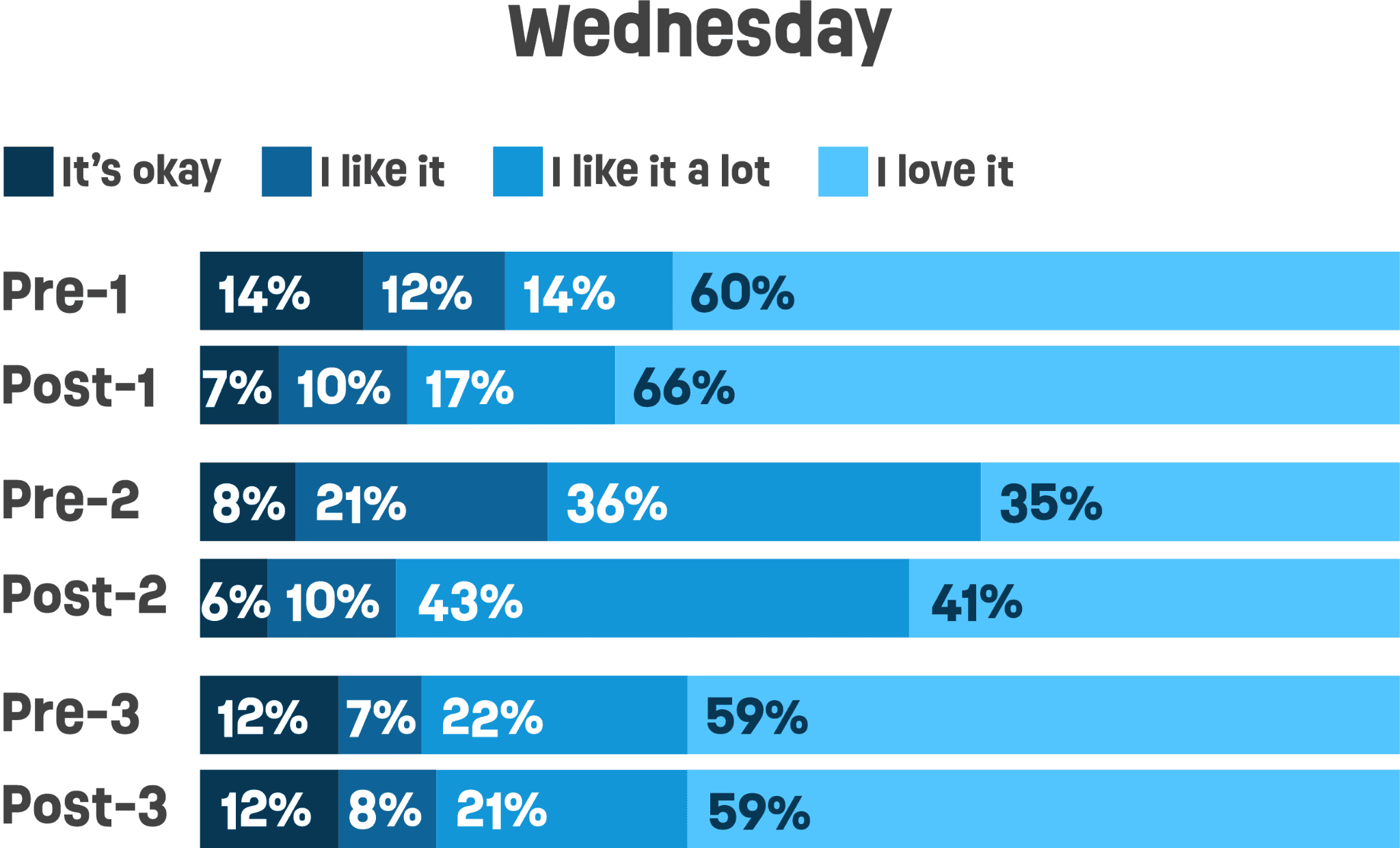
After Monday’s testing, we realized that our Likert-scale questions were not providing meaningful results—most students selected “Really agree,” making it difficult to observe any differences between the pre and post tests.
After Monday’s testing, we realized that our Likert-scale questions were not providing meaningful results—most students selected “Really agree,” making it difficult to observe any differences between the pre and post tests.
To gather more accurate data, we quickly revised the questions to focus on emotions, asking whether students liked the actions of washing hands, washing feet, and wearing shoes. We hypothesized that feeling connected to the game’s character and narrative might positively influence their attitudes toward these hygiene behaviors.
Pre Activity
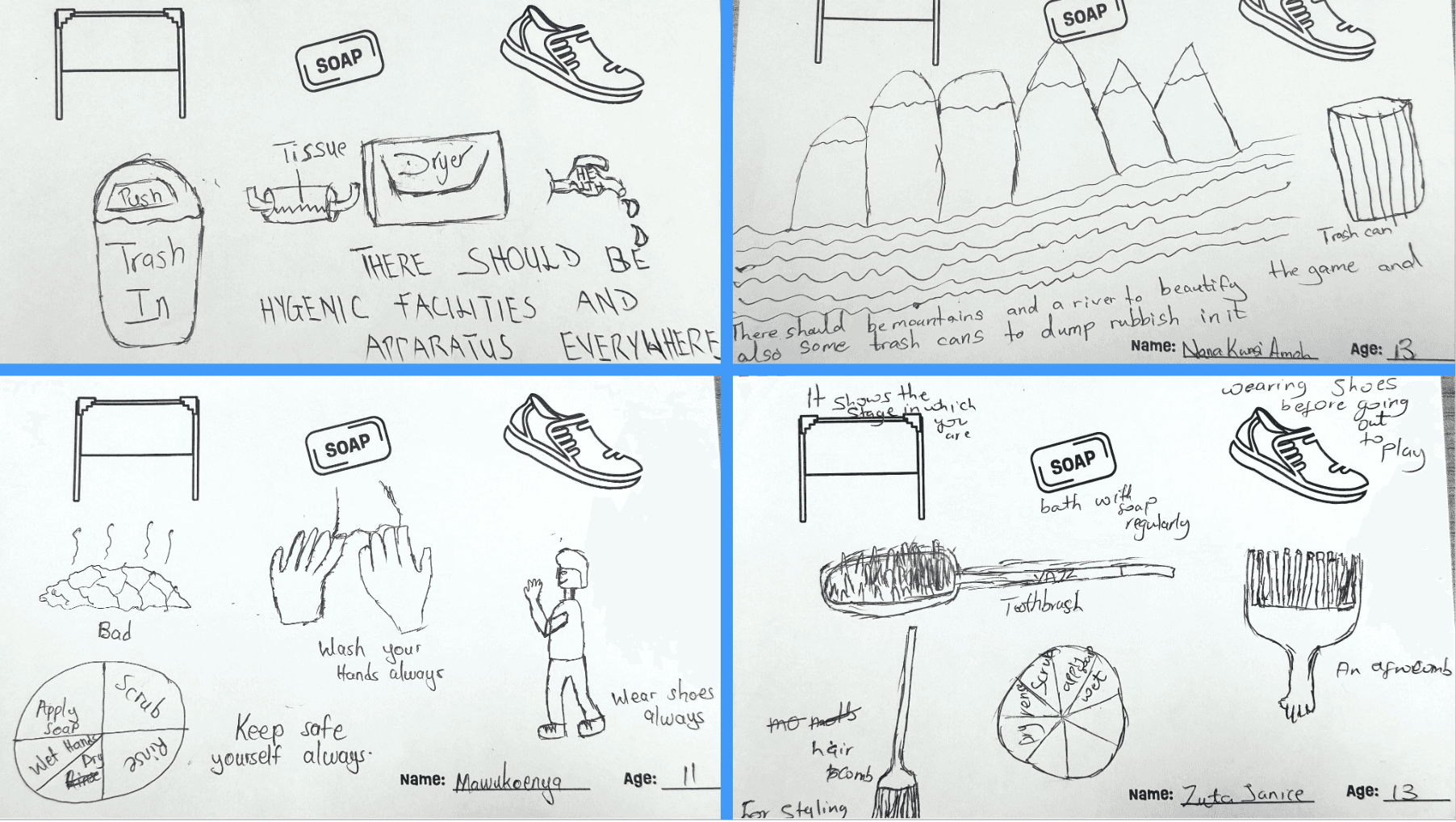
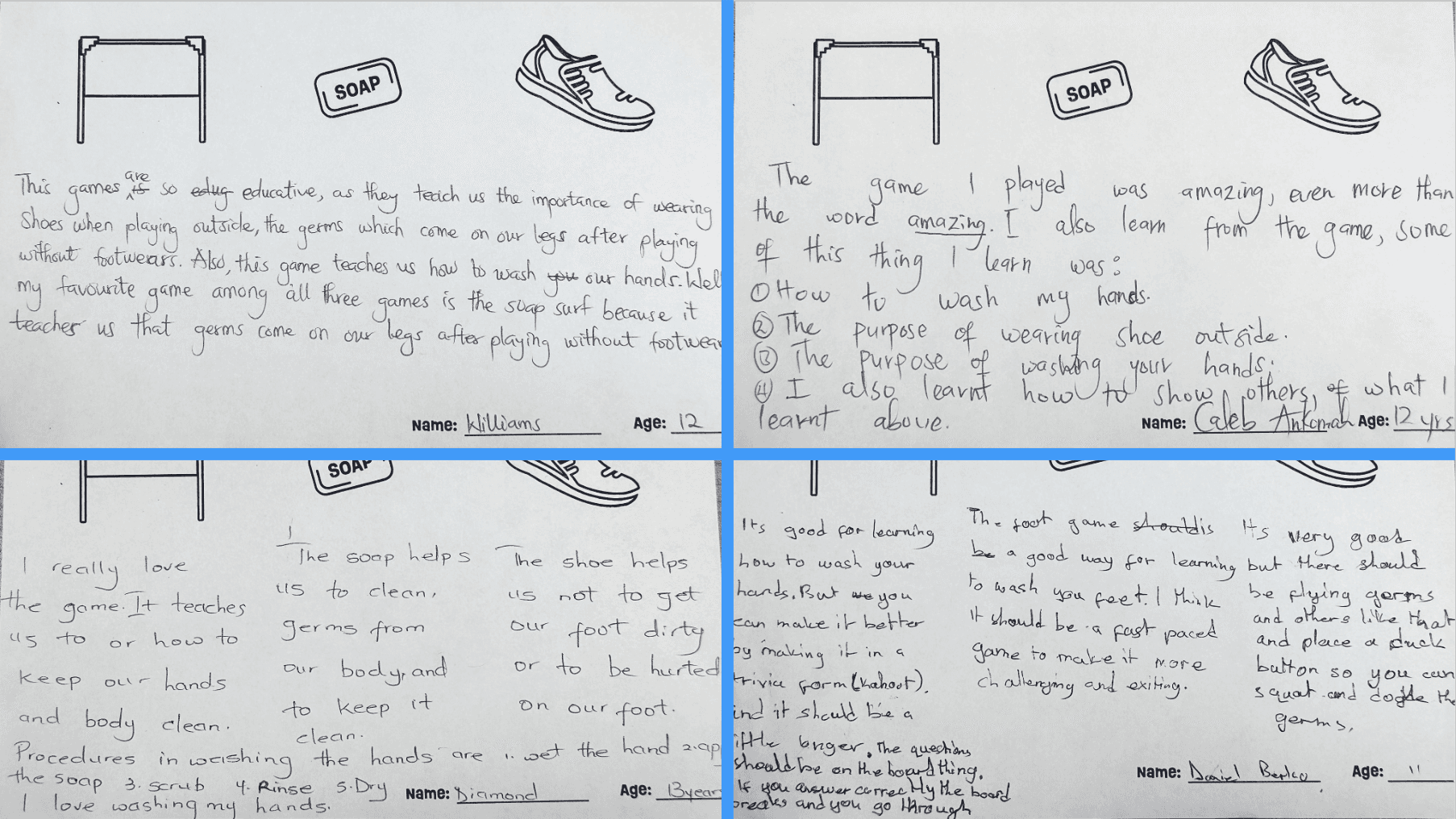
Co-design Activity
Monday Results
Wednesday Results
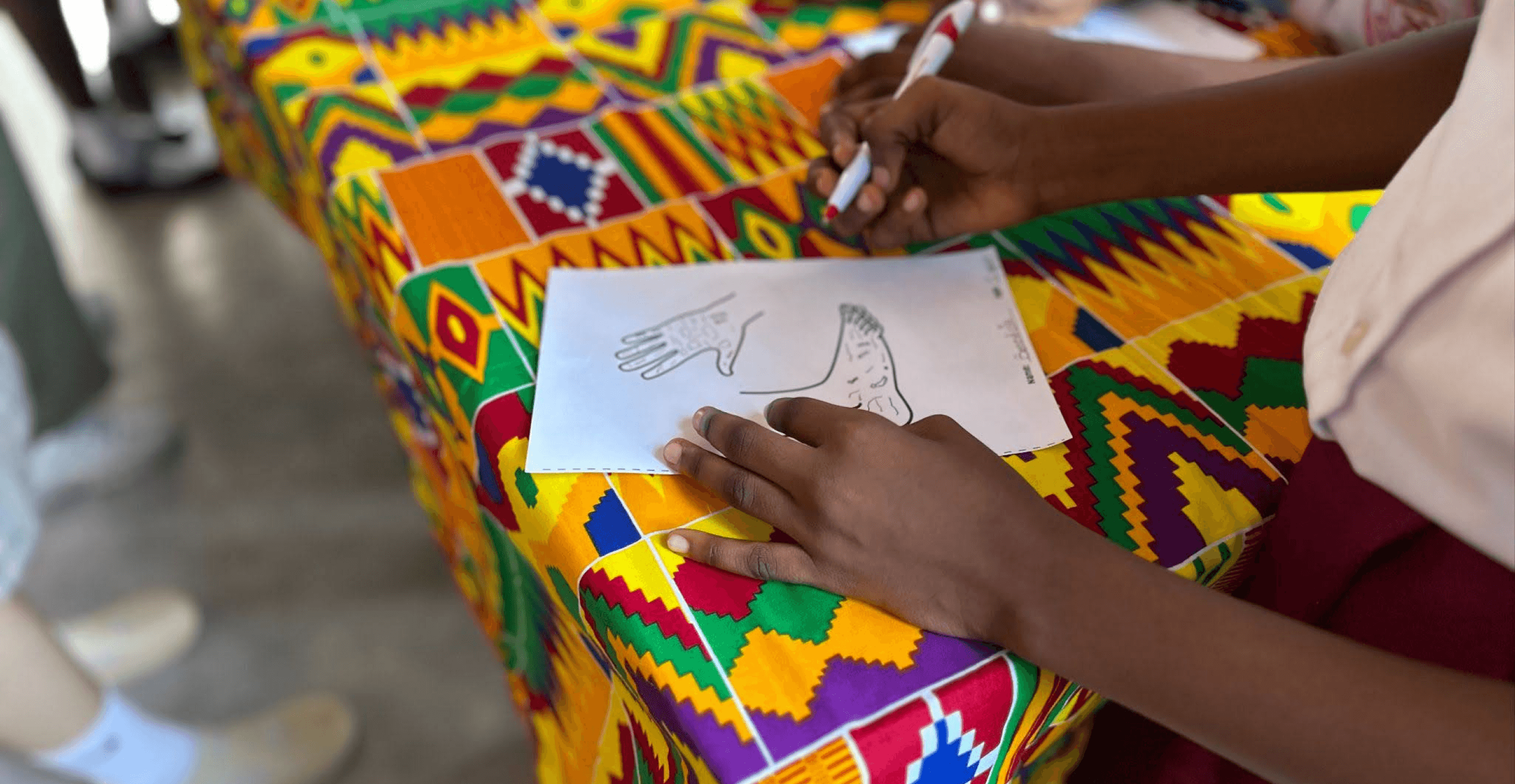
“What would someone’s hands and feet look like after playing outside all day without wearing shoes?”
“How would you describe the game to your friends and family?”
“What would you add to the game if you can design it?”
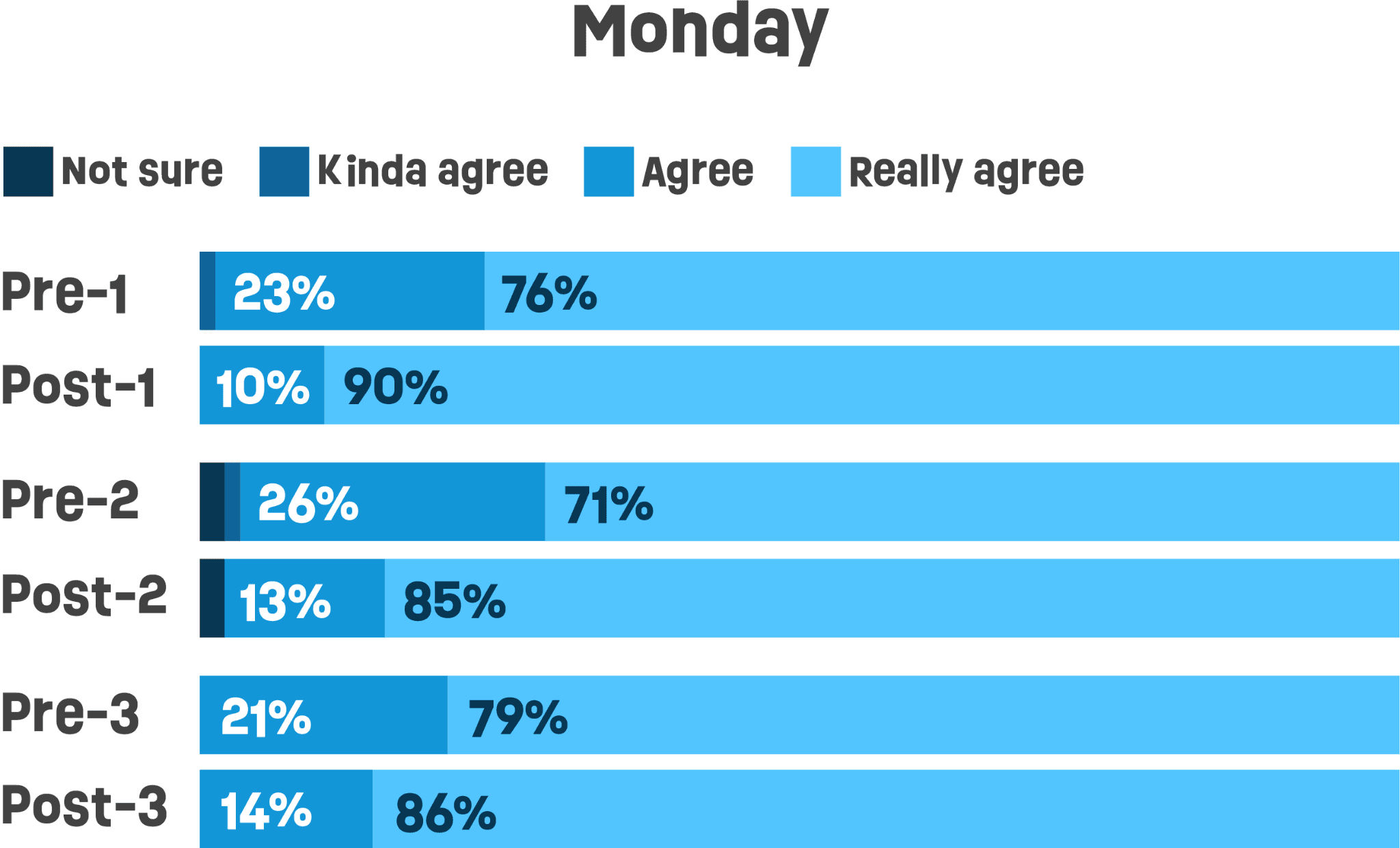
Less diverse answers
Not much difference
Less engaging
More diverse answers
Emphasize
emotional aspect
Overall increase in ‘I love it’ & ‘I like it alot’
Low Perception of Risks
Children often don’t recognize the dangers of poor hygiene because risks feel distant, invisible, or unrelated to their daily experiences.
01
Relevance of Content
Hygiene education is typically lecture-based, not interactive, and not culturally grounded (music, story, rhythm, or local context), making it harder for students to stay engaged.
03
Lack of Motivation or Incentives
Children lose interest quickly when learning is not fun, collaborative, or rewarding. Without personalized feedback or “little wins,” it’s difficult to maintain excitement.
05
No Belief in Consequences
Students have difficulty connecting hygiene behaviors with real-life outcomes, making it hard to prioritize consistent practice.
02
Insufficient Reinforcement
Learning happens only in the classroom. With limited repetition, few tools, and inconsistent access to clean water, hygiene habits fail to become long-term behaviors.
04
Limited Resources for Teachers
Large class sizes and minimal teaching materials make it challenging for teachers to deliver engaging, hands-on hygiene lessons.
06

Wash & Wear Program
Target Audience
Our Client
Affinity Diagram
Pain Points
Problem Statement
Barriers to Tackle
SME Interviews
UNDERSTAND
ANALYZE
RESEARCH
Low Perception of Risks
No Belief of Consequences
Relevance of Content
Insufficient Reinforcement
Lack of Motivation
or Incentives
Peace Fidele Uwihangana
Entrepreneur
Habineza Theobard
Rwanda Association of
Environmental Practitioners

Shevta Naidoo
Filmmaker @ South Africa
Eric
Educator @ Rwanda
Jean Christian Kayonga
Co-Founder of Rwanda
Esports Organization

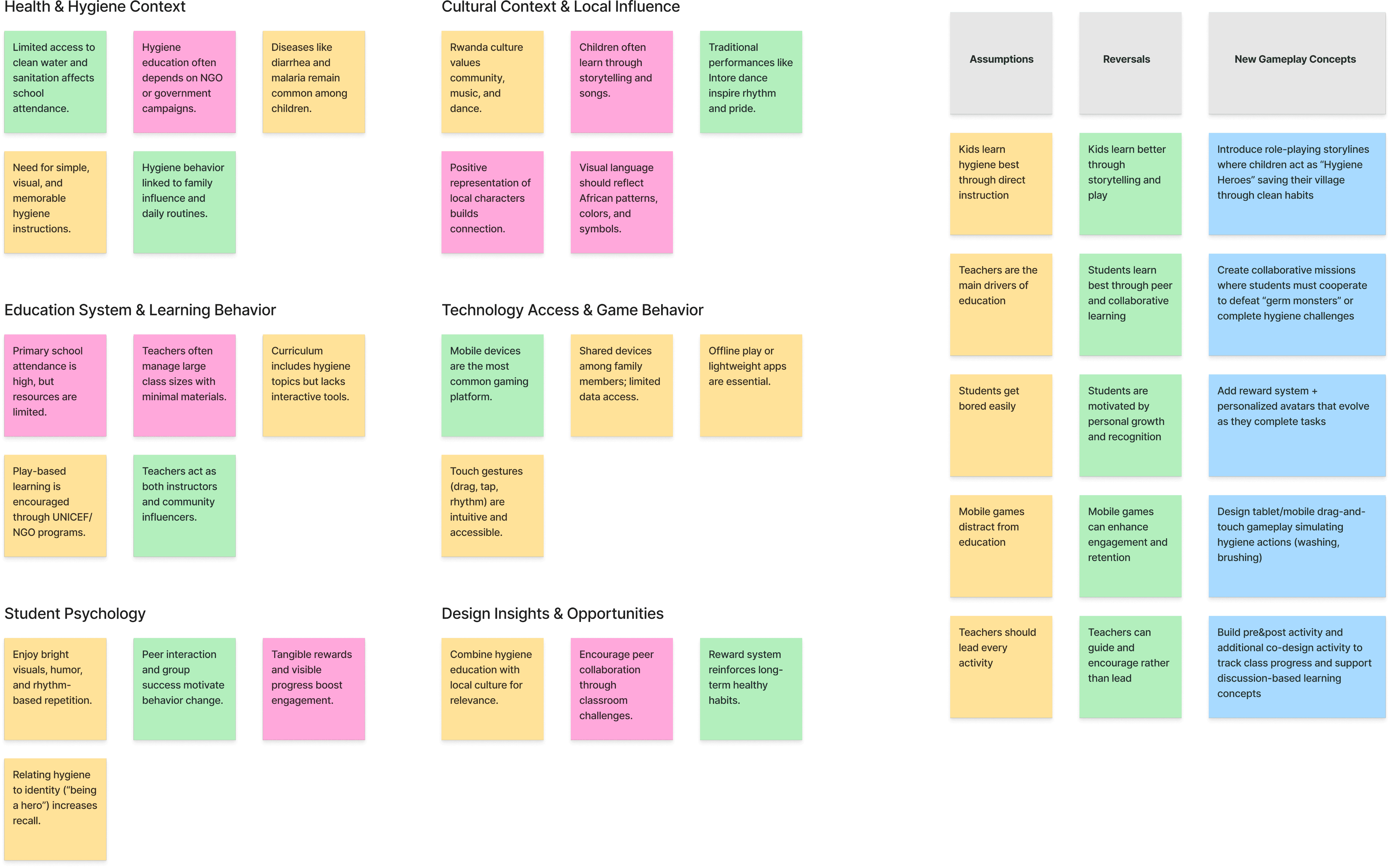
By leveraging local culture (music, dance, storytelling), playful interactions, collaboration, and simple digital tools, we can make hygiene education memorable and emotionally meaningful. Through fun challenges, incentives, and practical reinforcement, we can help students recognize risks, value hygiene, and carry habits beyond the classroom into everyday life.
DESIGN GOAL
How might we design a hygiene learning experience that helps children in Rwanda build awareness, engagement, and long-term healthy habits?
The main barriers to tackle in this project include a low perception of risks and lack of belief in consequences, as many children are unaware of the long-term impact of poor hygiene. The relevance of content is another challenge, since lessons may not reflect their real-life environment or needs. Insufficient reinforcement at home or school makes it easy for students to forget hygiene practices, while a lack of motivation or incentives limits engagement, as kids aged 10–14 respond best to fun, achievement, and recognition.
Create a game world where children become national representatives competing in the Hygiene Hero Cup, a global tournament celebrating hygiene, teamwork, and community health. By combining sports—a highly motivating theme for Rwandan children—with culturally grounded storytelling and playful challenges, players learn essential hygiene skills through action, exploration, and visual transformation.
As players progress through African-inspired environments, the world around them becomes cleaner and healthier, showing how small hygiene habits lead to meaningful change. Players collect Challenge Medals in each mini game, and those who excel earn the title Global Hygiene Ambassador, gaining social recognition and becoming role models for hygiene worldwide.
Barrier Resolution
Persona
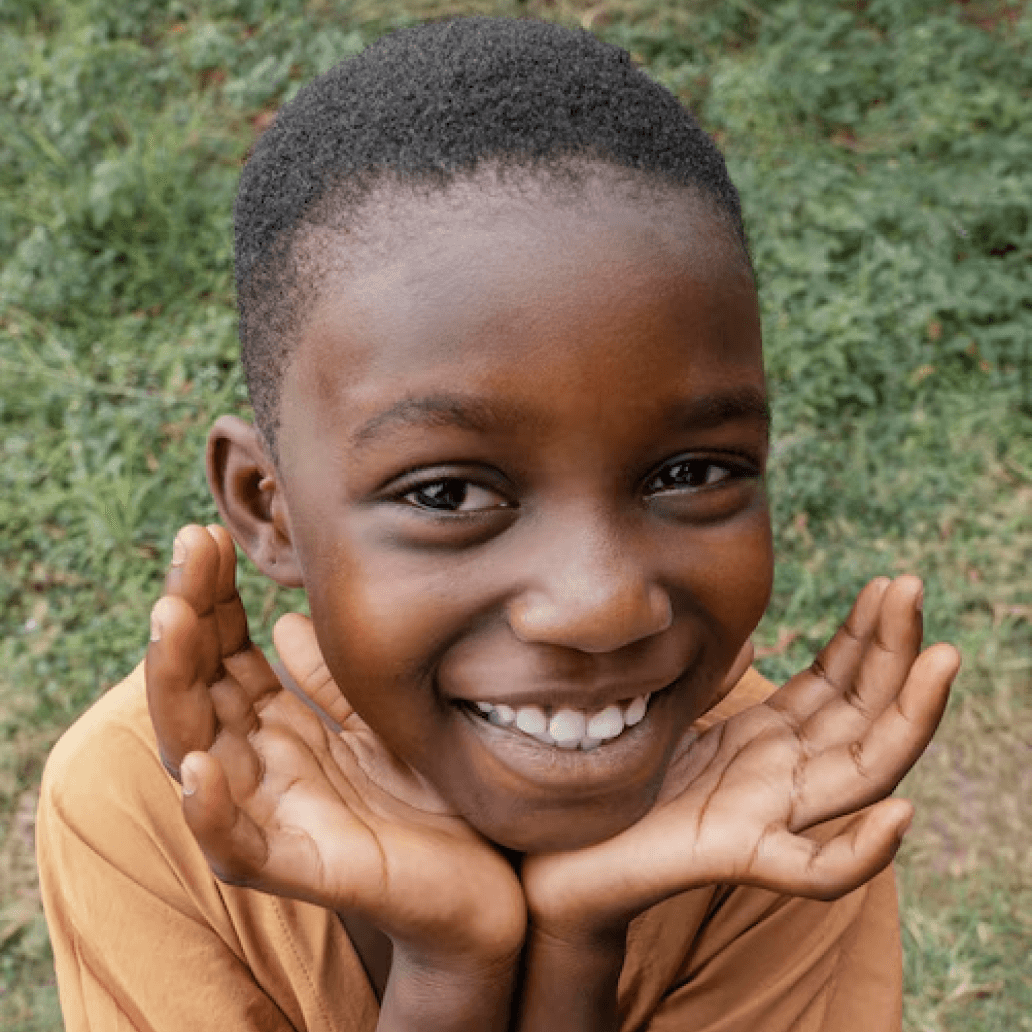
Jean-Paul lives in a small community in Kigali with his parents and two younger siblings. He attends a local primary school where he is in the 5th grade. Jean-Paul needs to learn practical hygiene habits, such as washing hands before eating and properly wearing the shoes, in a way that's engaging and easy to remember. Jean-Paul needs to stay entertained since he is easily to lose interest if the education content is too much.
10 years old
Student living in Kigali, Rwanda
Hobby: Playing soccer, watching animation
Jean-Paul
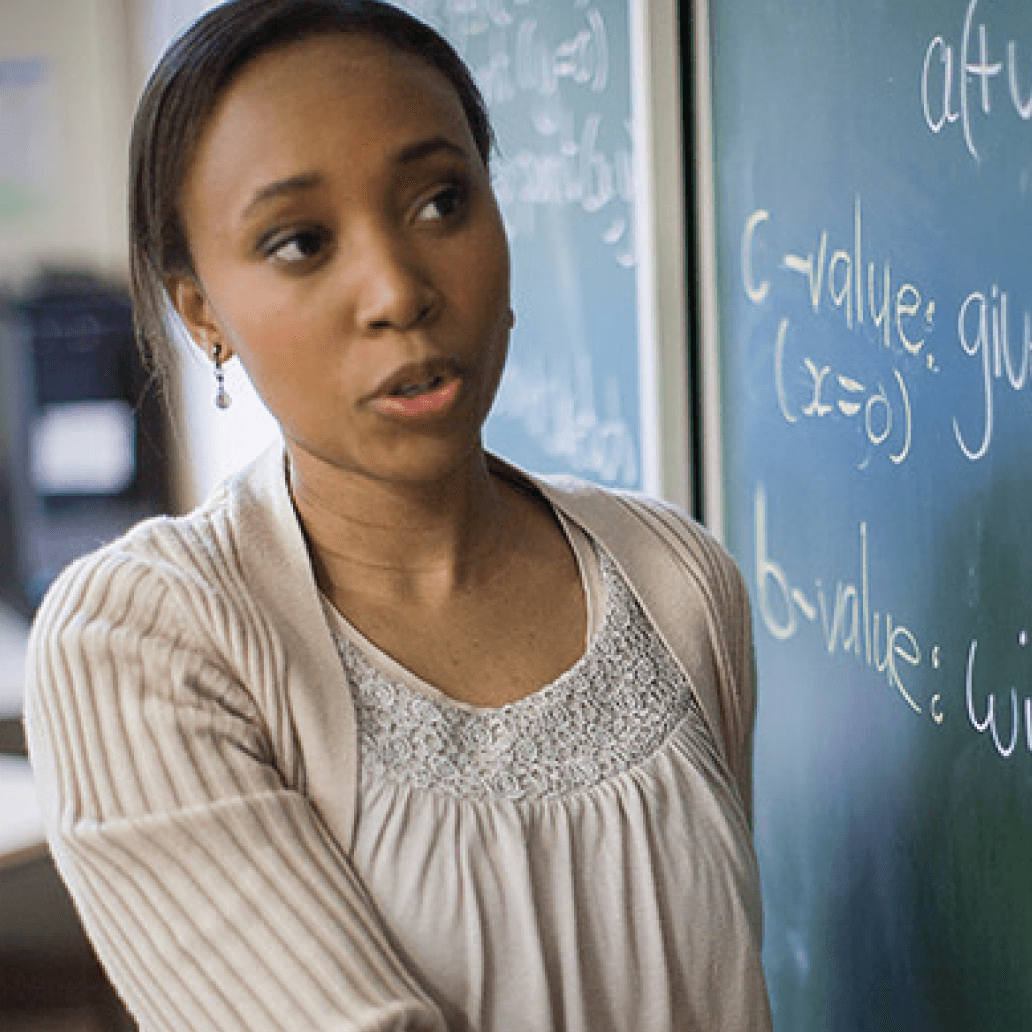
Ms. Amina is a dedicated primary school teacher with over 10 years of experience teaching students aged 6 to 12. She works at a local primary school in Accra, where she teaches multiple subjects, including health and hygiene. Passionate about her students' well-being, she often incorporates practical life lessons into her curriculum. Ms. Amina needs educational tools that are easy to integrate into her classroom activities and that engage her students effectively. She looks for resources that are culturally relevant and simple to use, helping her teach important topics like hygiene in a way that resonates with her students.
34 years old
Teacher living in Accra, Ghana
Hobby: Playing mobile games, reading, watching films
Ms.Amina
Hygiene Hero Cup
NARRATIVE IDEATION
DESIGN DECISION
RESEARCH
Children represent their nationality and take responsibility for improving their environment.
Ownership
Mini-games provide quick victories that reinforce hygiene habits.
Little Wins
African patterns, landscapes, characters, and sports elements enhance cultural resonance.
Familiarity
Higher sustained engagement and long-term hygiene behavior
+
+
=
Initial Concept Art
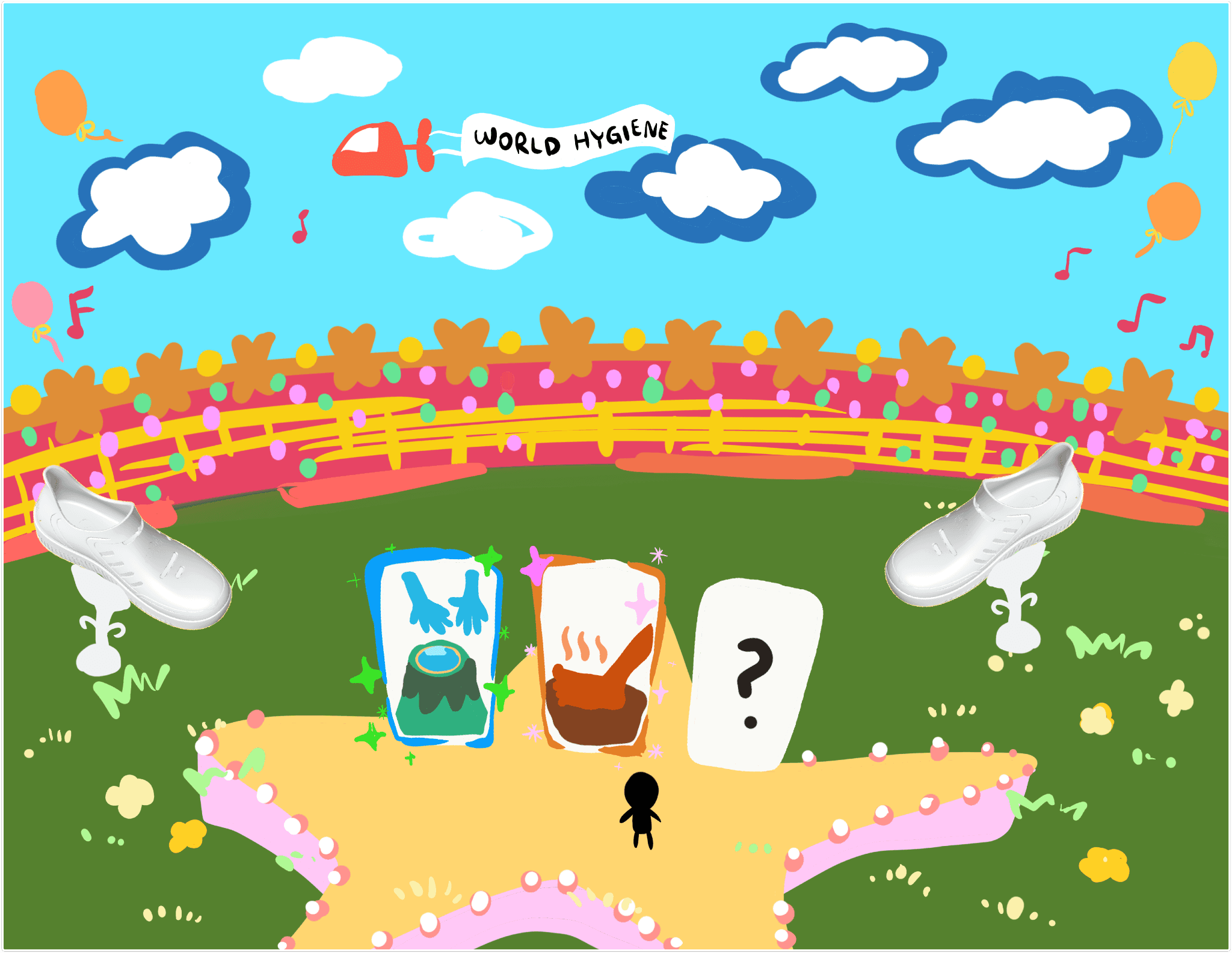
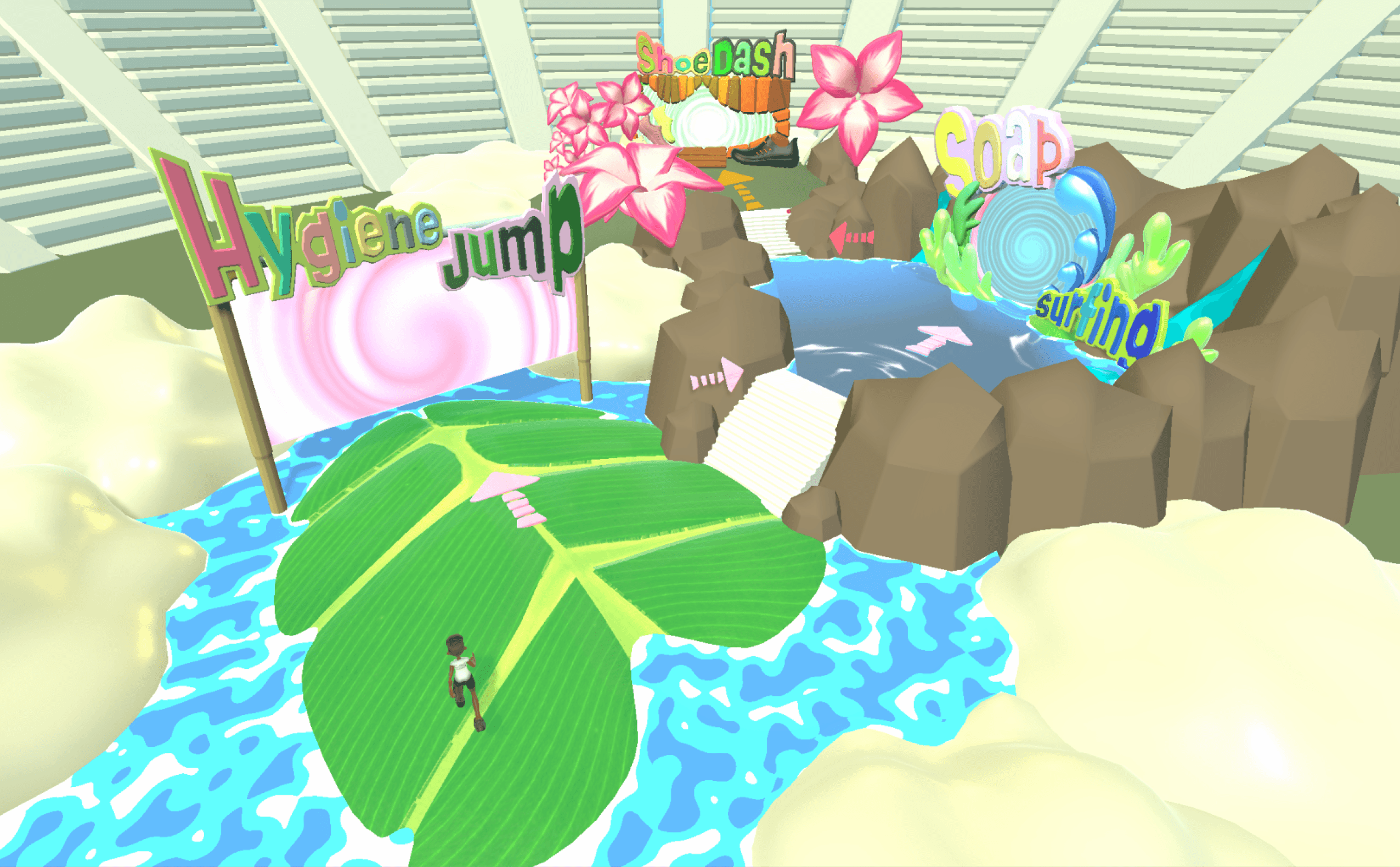
Hygiene Jump teaches the proper steps of handwashing. Players learn the five official steps through a rhythm-based high-jump challenge. Correct answers allow the avatar to leap over obstacles, while mistakes trigger playful setbacks like slipping into dirty puddles. With vivid visuals and consistent repetition, students build strong foundational handwashing habits.
Hygiene Jump:
Hand Washing + High Jump
MINI GAME IDEATION
Proper Hand Washing Steps
Vivid Visual Representation
Reinforcement Method
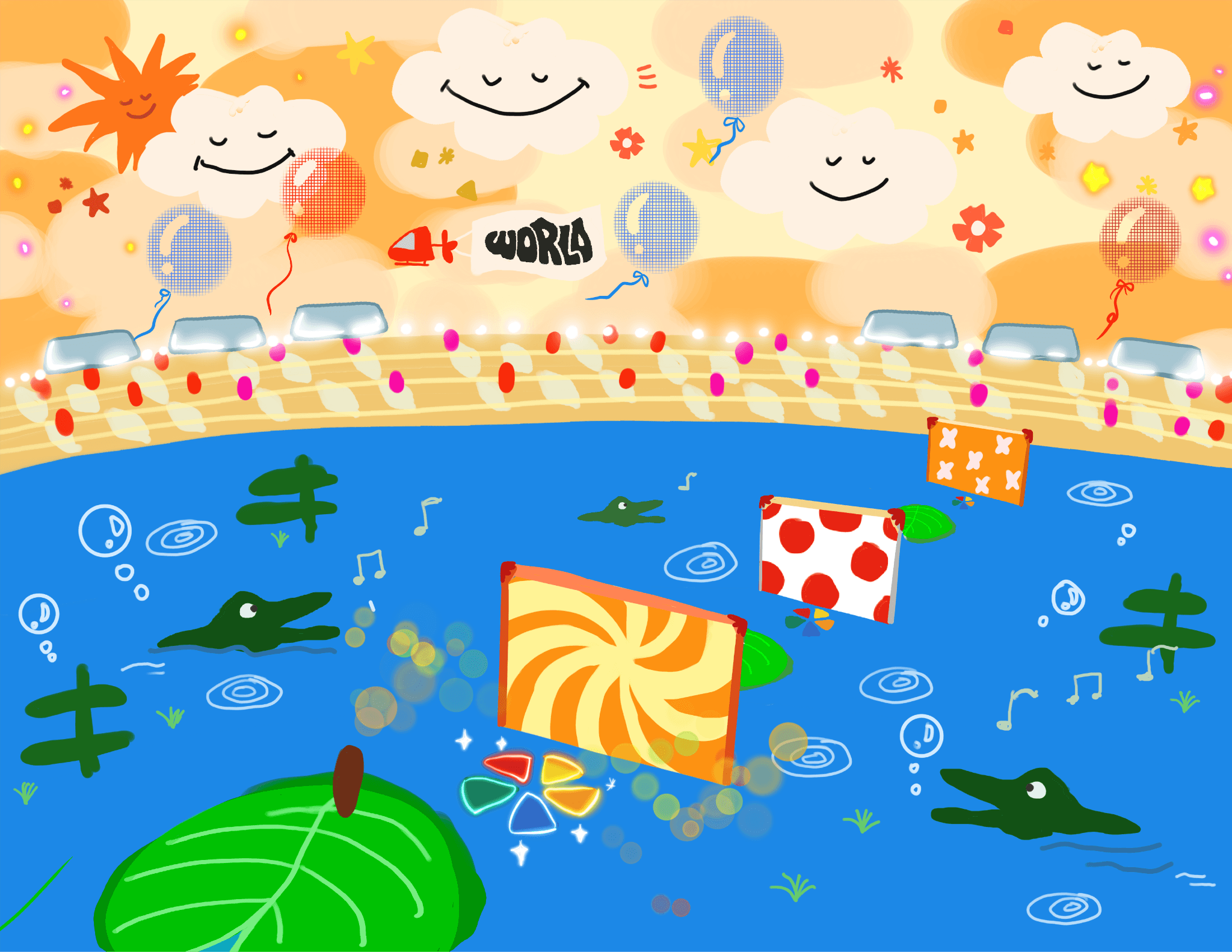
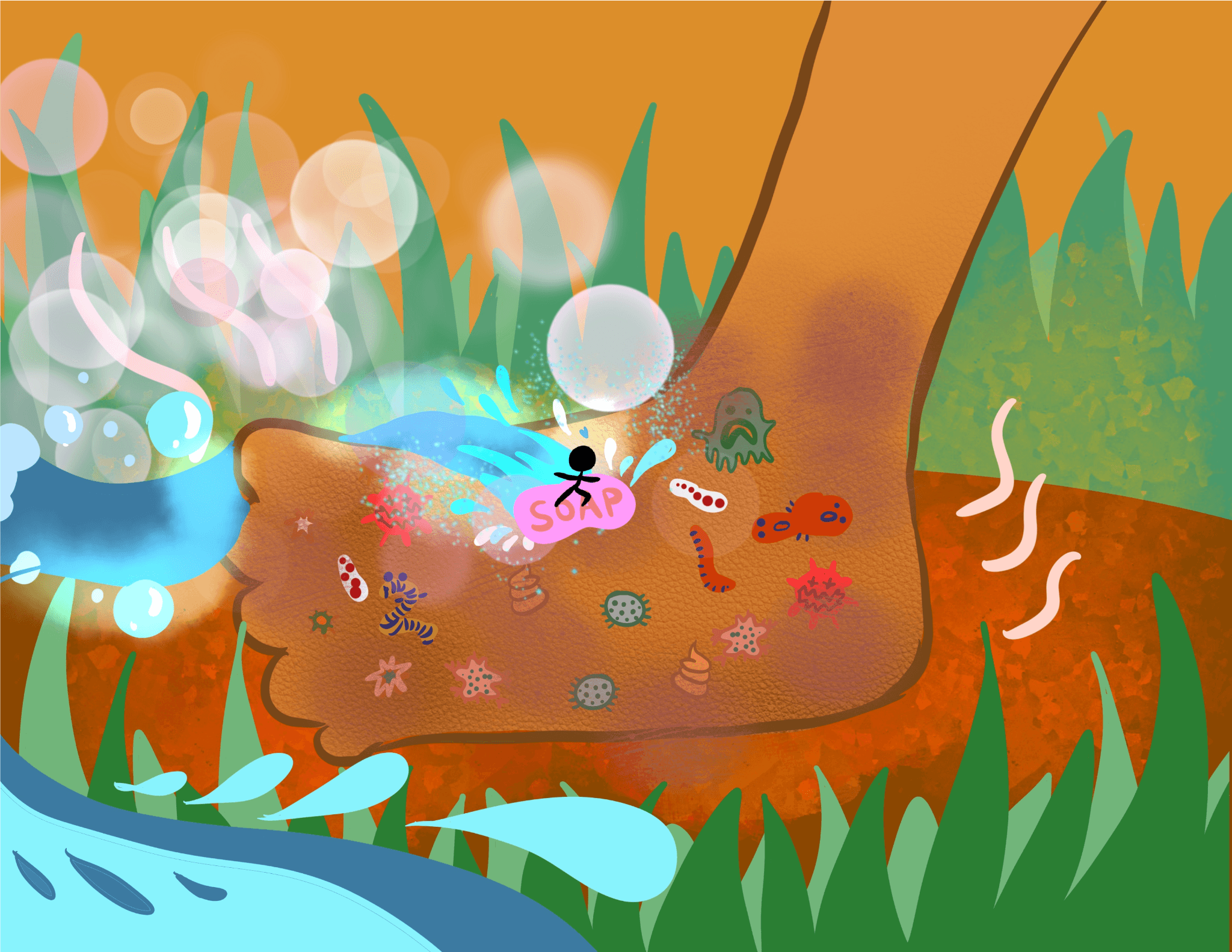
Soap Surfing demonstrates the importance of washing feet regularly. Players shrink down and surf on a soap bar across a giant human foot, cleaning germs, mites, and mud as they race through the level. Life-sized bacteria and textured infections create impactful visual threats that illustrate the real risks of poor foot hygiene.
Soap Surfing:
Foot Washing + Surfing
Clean Off Germs on Foot
Visually Impactful Threats
Risk Visualization
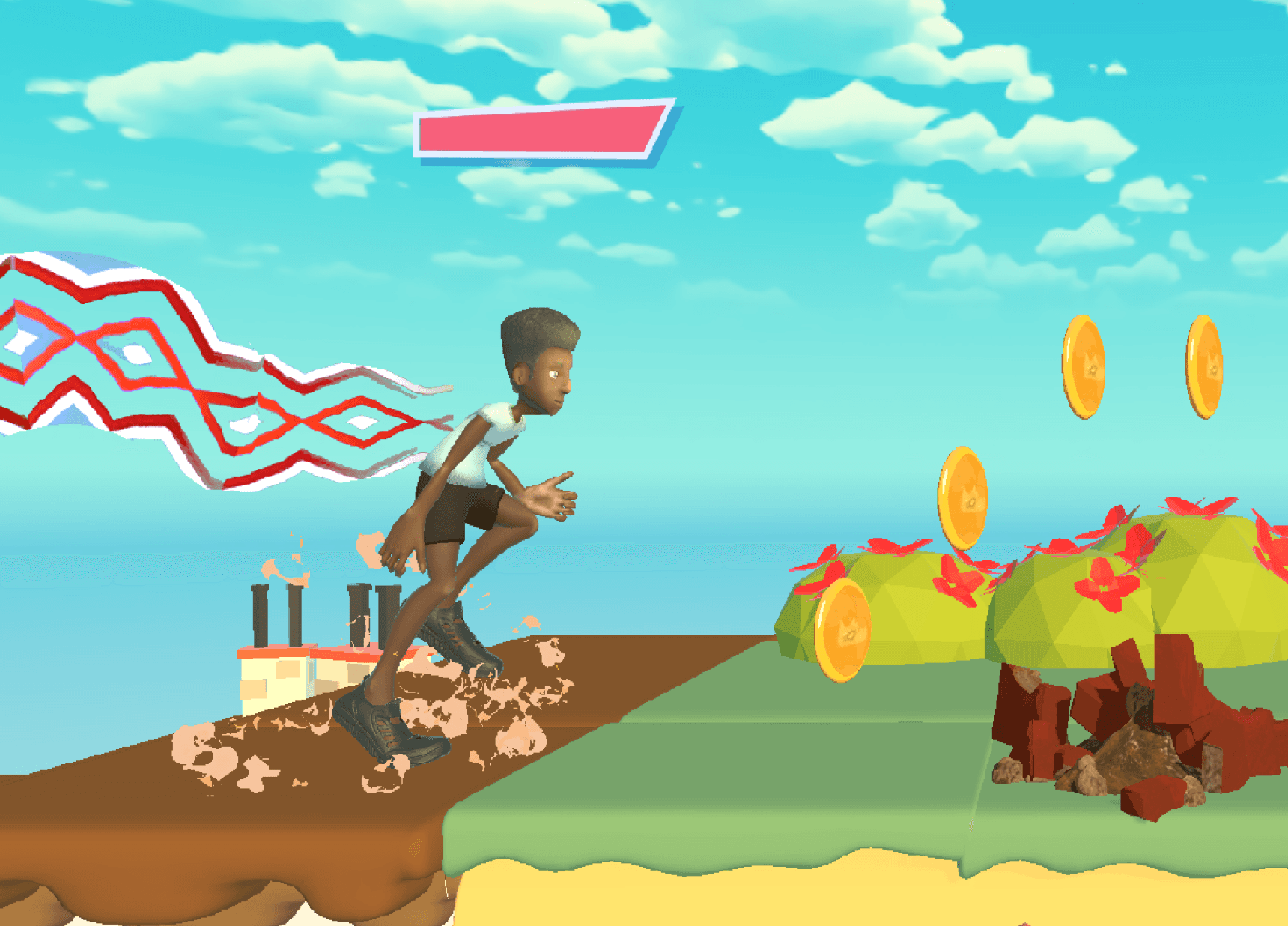
Shoe Dash emphasizes why wearing shoes matters. Without shoes, players take immediate damage from sharp debris, mud, and harmful objects scattered along the ground. Once they put on protective shoes, they can run safely, collect rewards, and clearly understand how shoes prevent injuries.
Shoe Dash:
Wearing Shoes + Running
Protective Shoes
Immediate Reaction of Harm
Understanding Consequence
Low Perception of Risks
Immediate and visually impactful threats in Mini2
(Life-Sized bacterias)
Incorporating textures of diseases
on the foot of Mini2
Interviews with SMEs about local context
Reinforcement education method used in Mini1
Reward achievement method
Social recognition through ‘Global Hygiene Ambassador’
No Belief of Consequences
Relevance of Content
Insufficient Reinforcement
Lack of Motivation
or Incentives
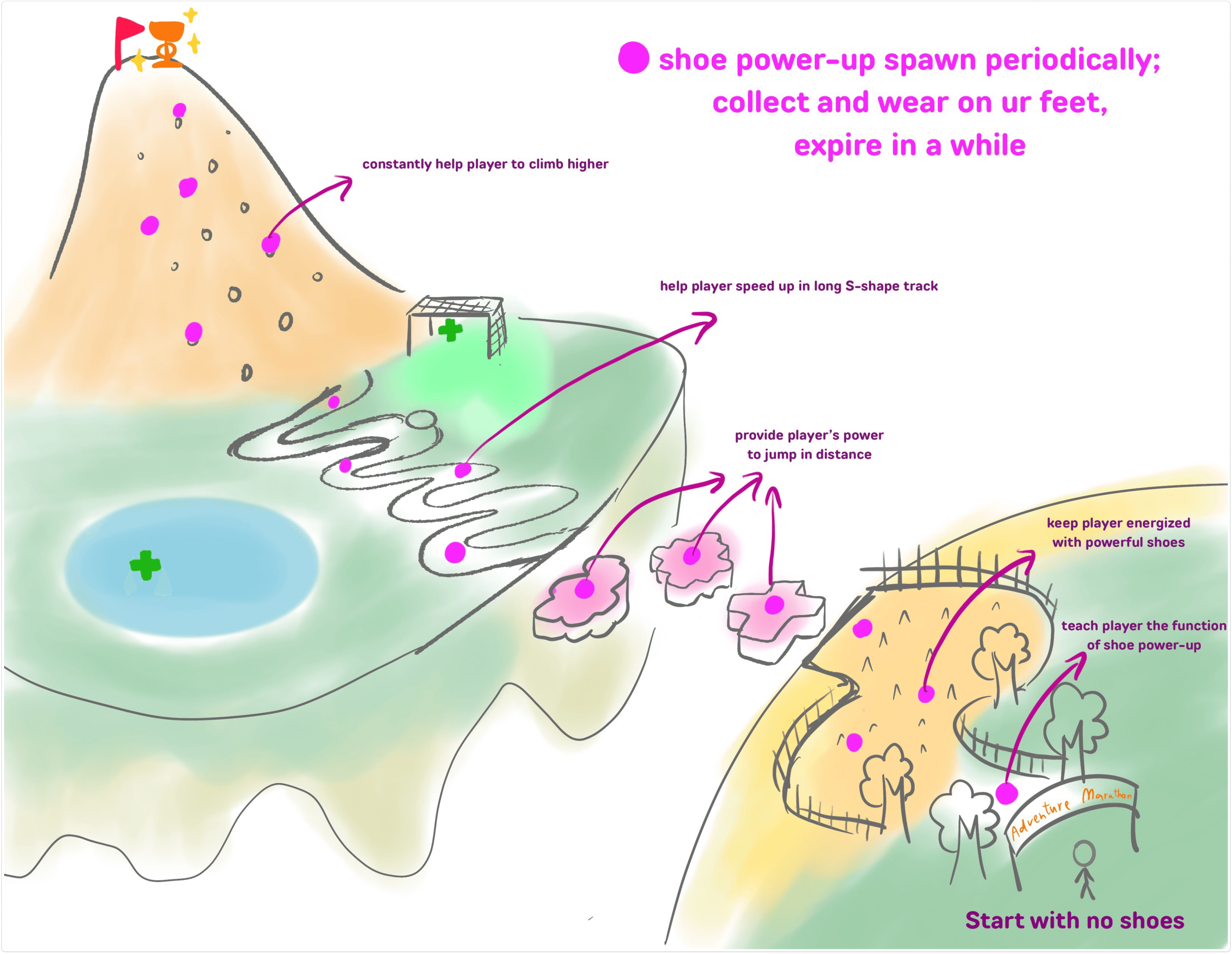
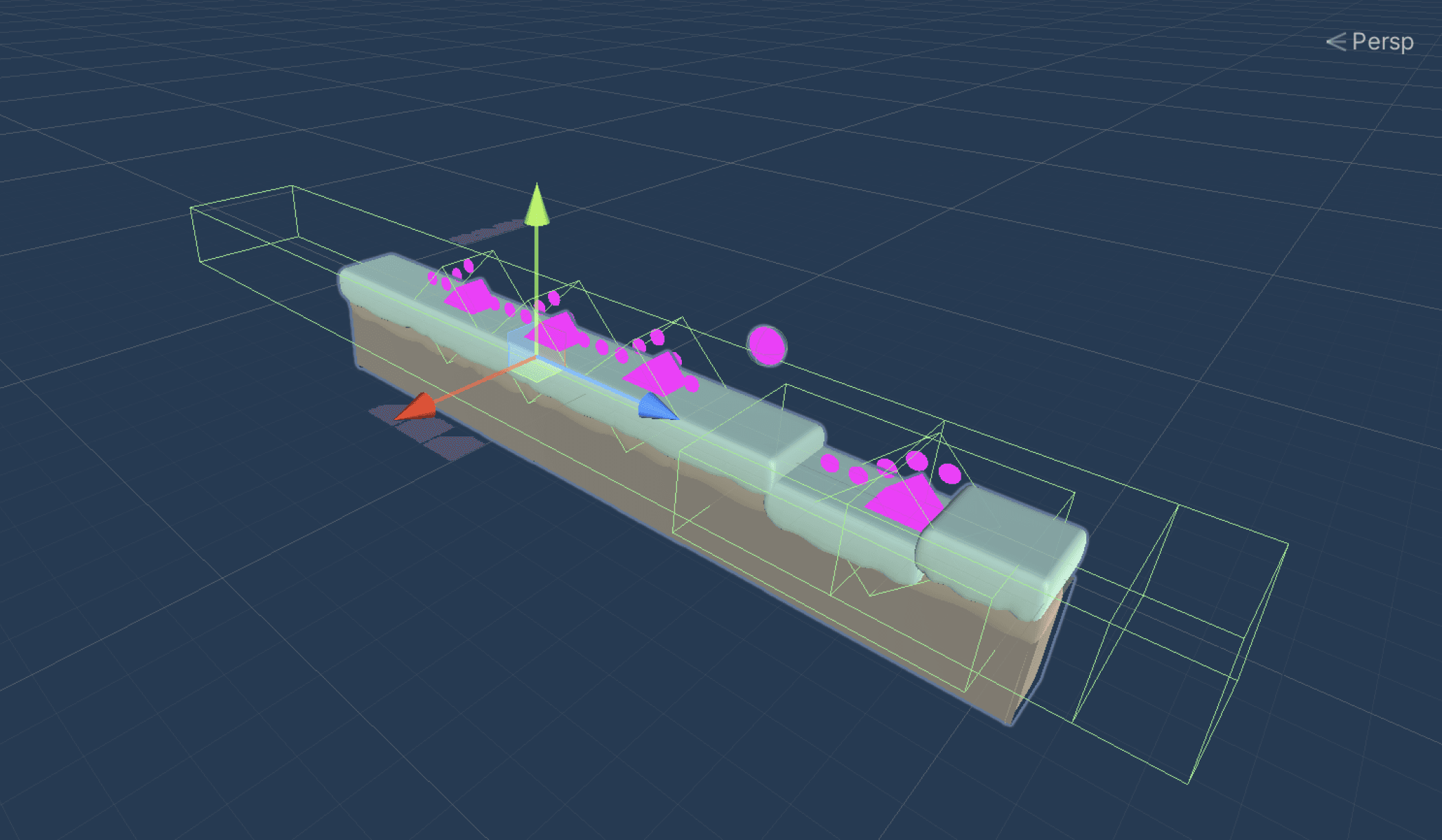
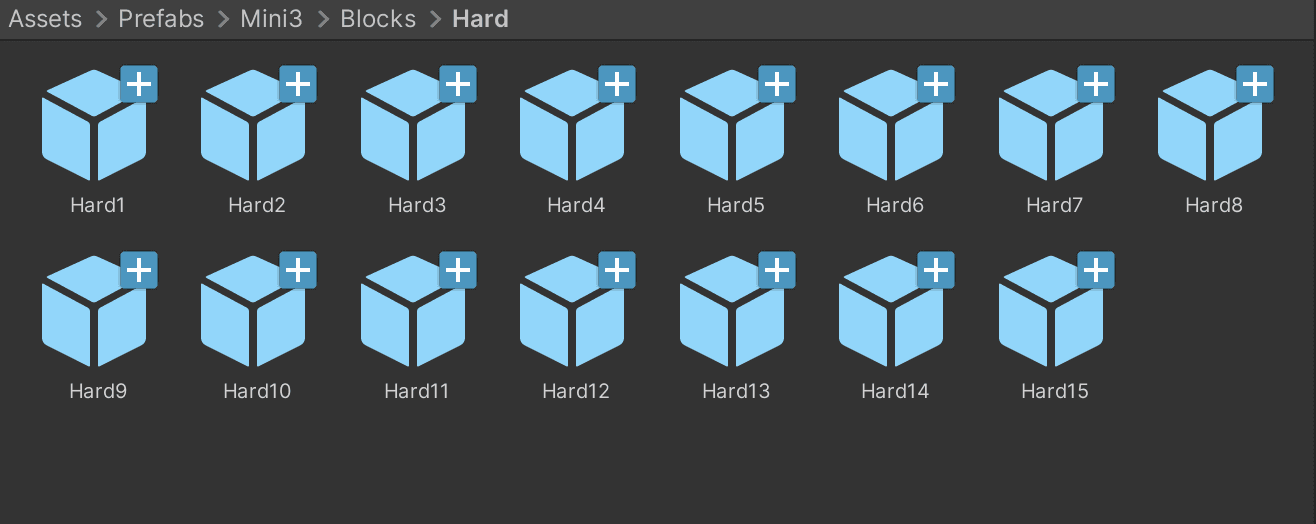
To design the level for Shoe Dash in Unity, I created a 50-unit platform composed of three different block types that control pacing, difficulty, and rewards throughout the run. The final layout includes 15 Easy blocks, 15 Hard blocks, and 5 Reward blocks, each intentionally designed with unique hazards, textures, and feedback elements to highlight the importance of wearing shoes.
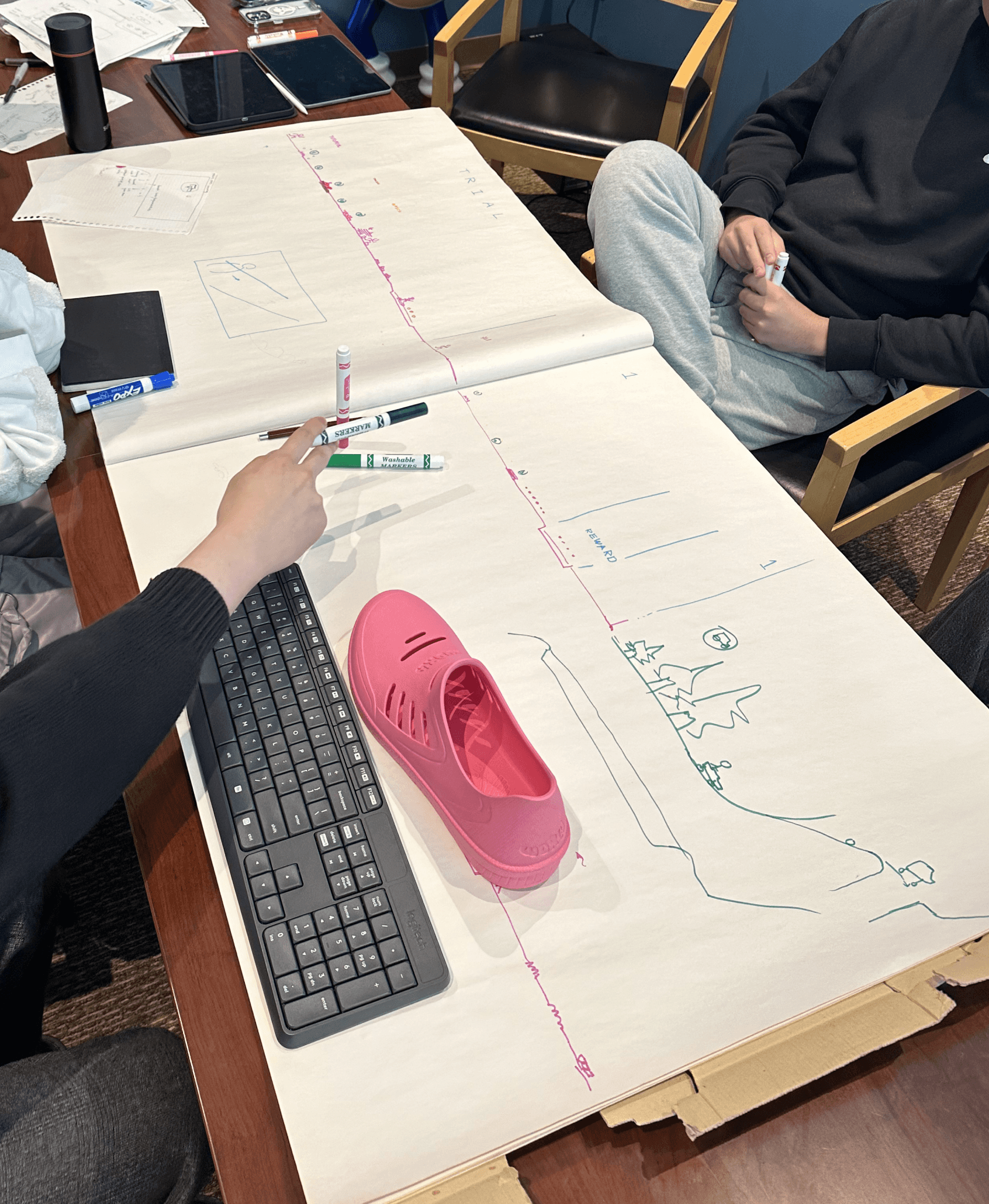
I sketched the full layout on paper and iterated through multiple tests to determine the ideal block order and difficulty curve. This allowed me to balance challenge and learning, ensuring that players clearly experience the difference between running barefoot—where hazards cause immediate harm—and running with protective shoes, where movement becomes smooth and safe.
Shoe Dash Level Design
LEVEL DESIGN
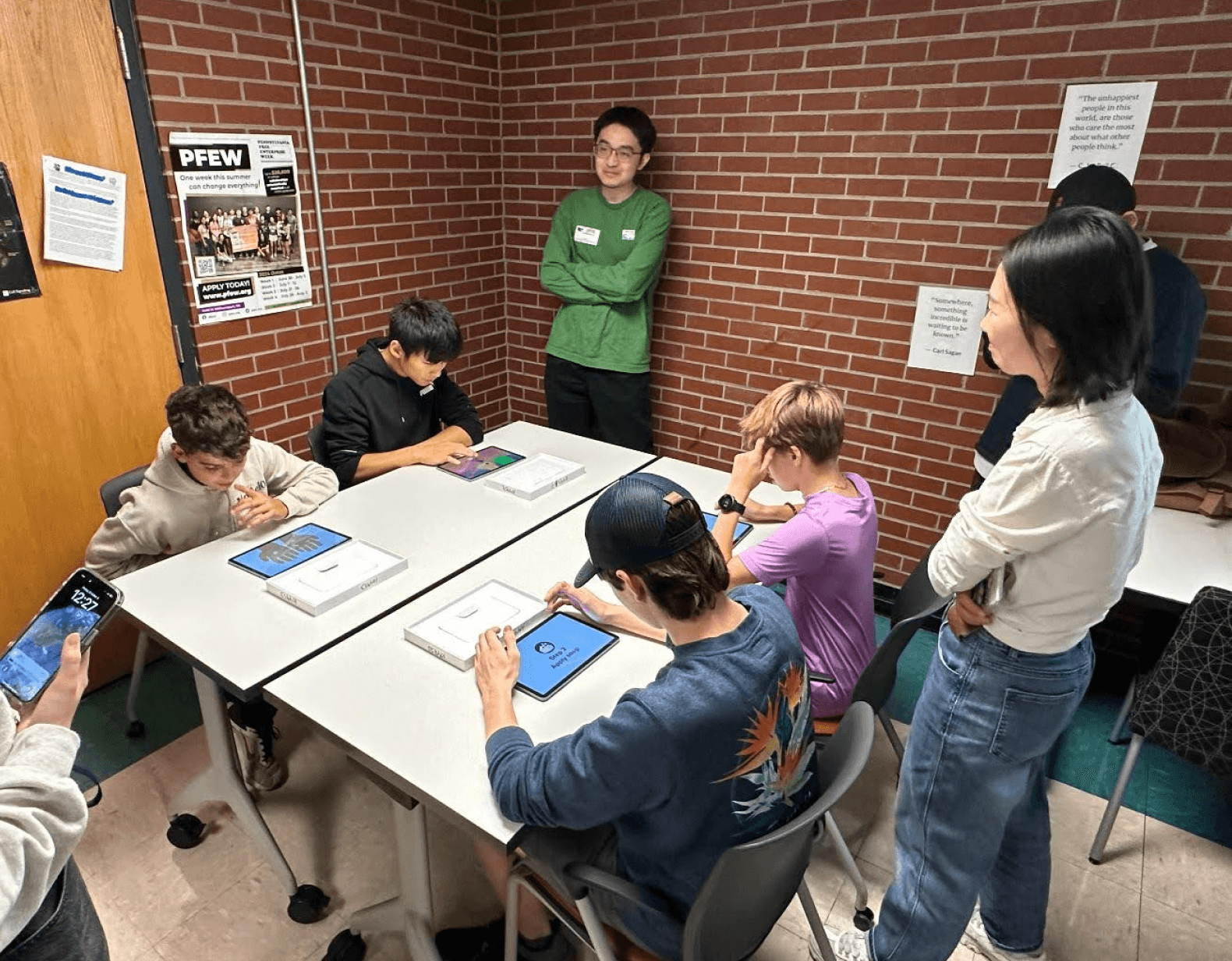
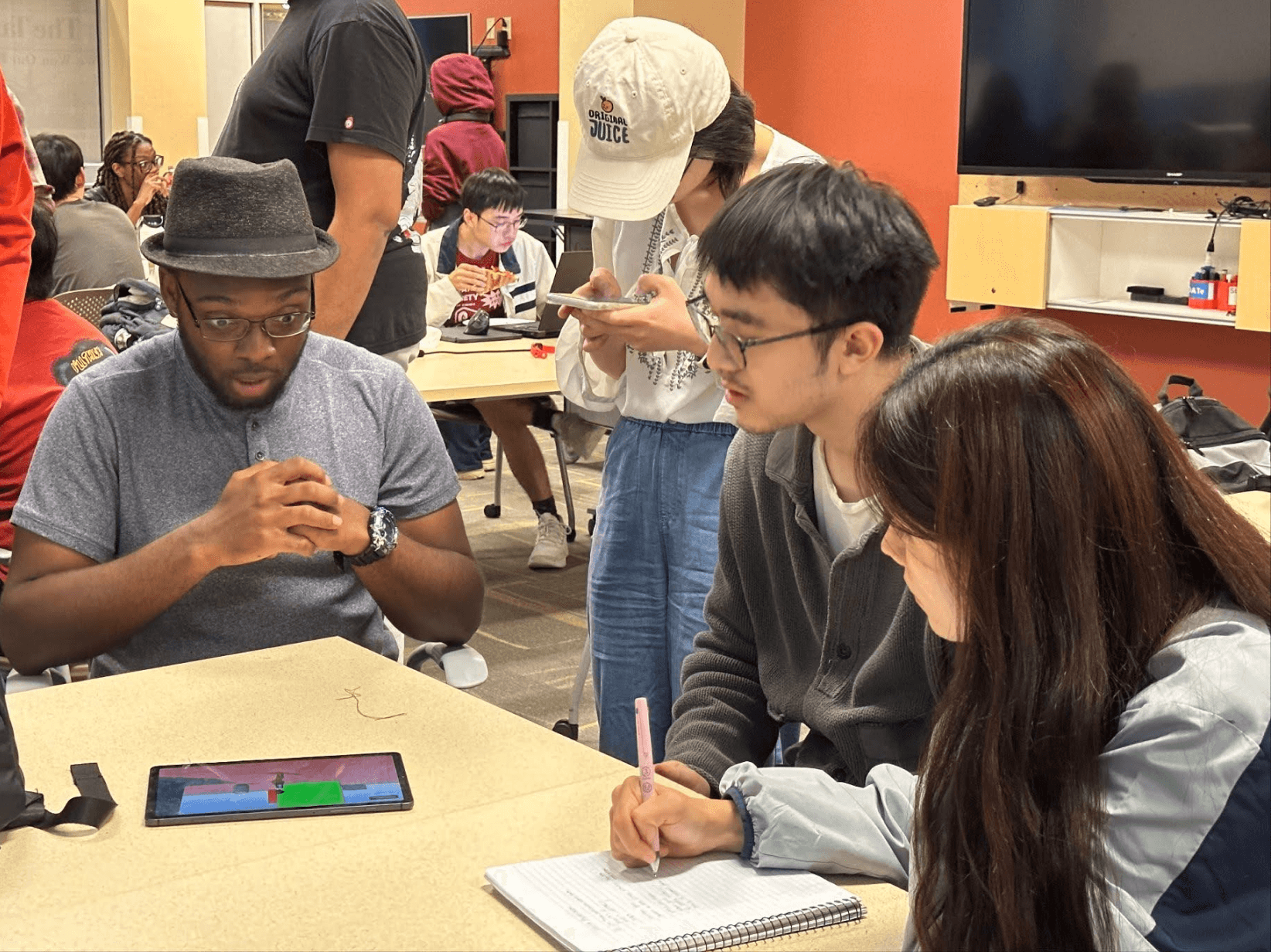
From multiple rounds of playtesting—starting from target audience age range and the other with an older, more skilled player group—we gathered valuable insights that directly informed our next iteration. The middle school session allowed us to observe players whose age range closely matches our target audience. Their feedback highlighted the need for clearer instructions, refined interactions, better pacing, and a shorter tutorial experience.
Meanwhile, during the Playtesting Night held in CMU, older players demonstrated stronger gameplay literacy, which helped us identify more nuanced usability issues, particularly around instruction clarity and moment-to-moment feedback. Combining insights from both groups, we identified key areas for improvement that would make the experience more intuitive and accessible.
Playtesting with different age groups
USER TESTING
Clearer Instructions
Refined Interactions
Refined Interactions
Better Pacing
Shorter Tutorial Experience
Final Gameplay & Visuals
FINAL PROTOTYPE
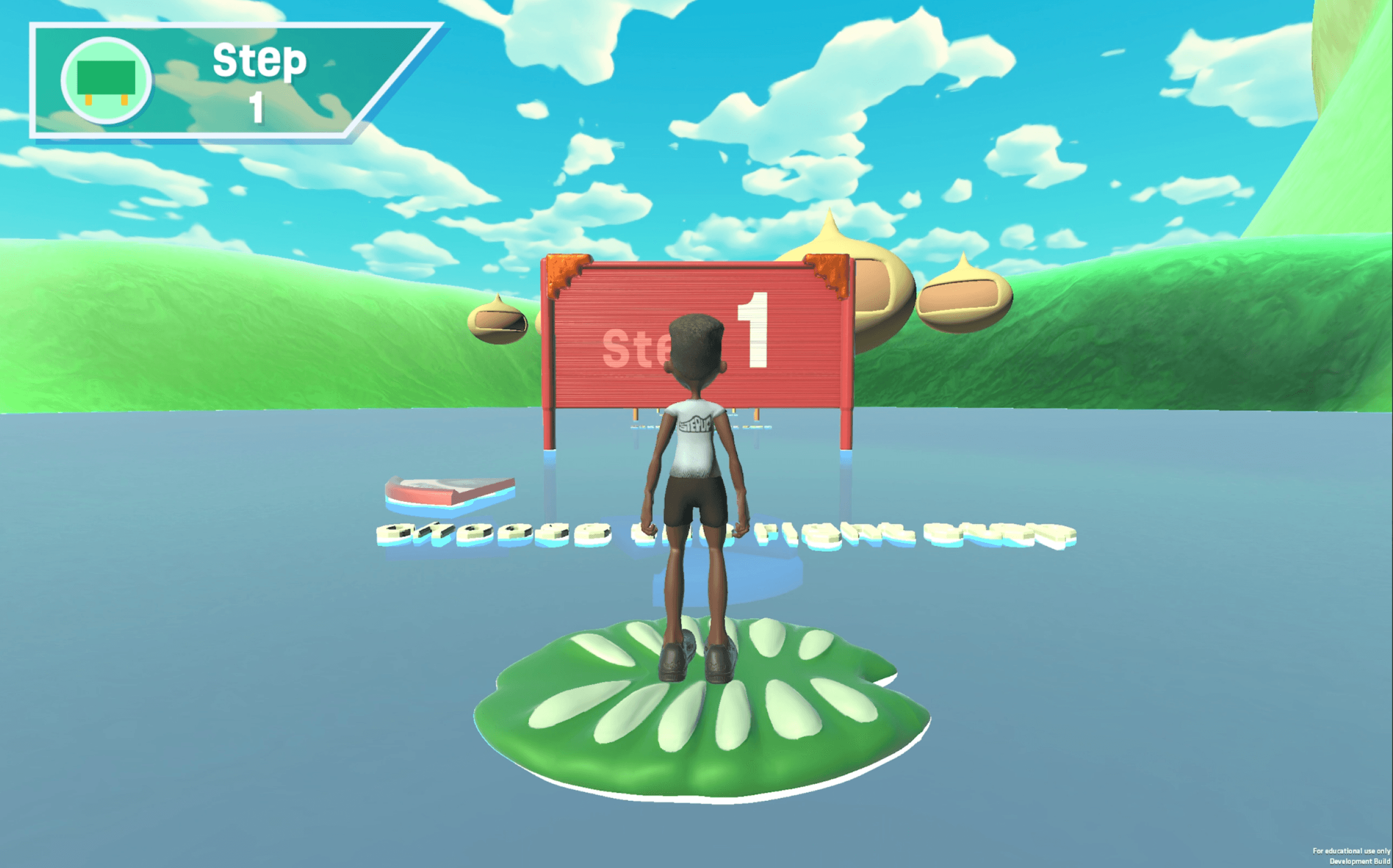
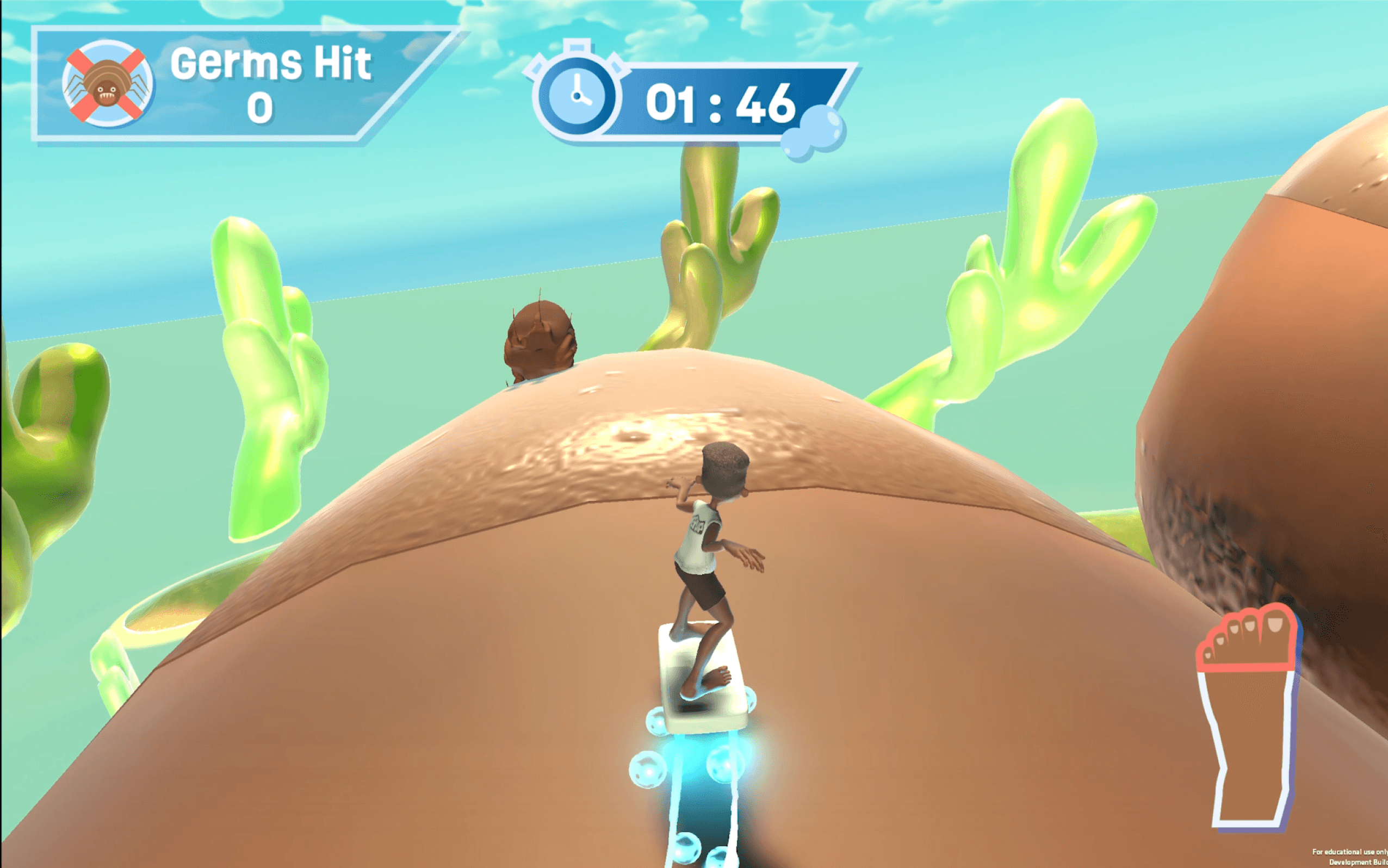
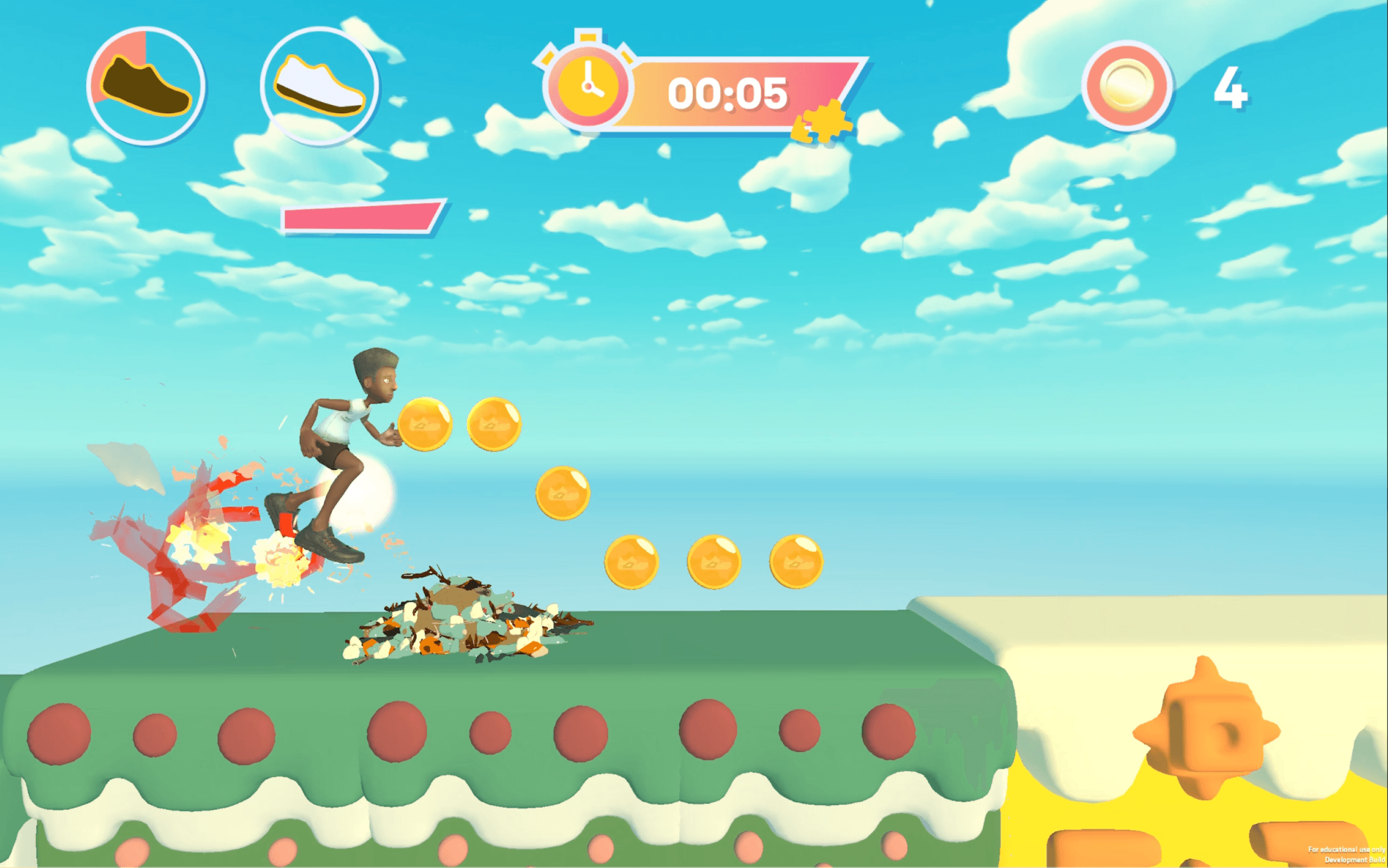
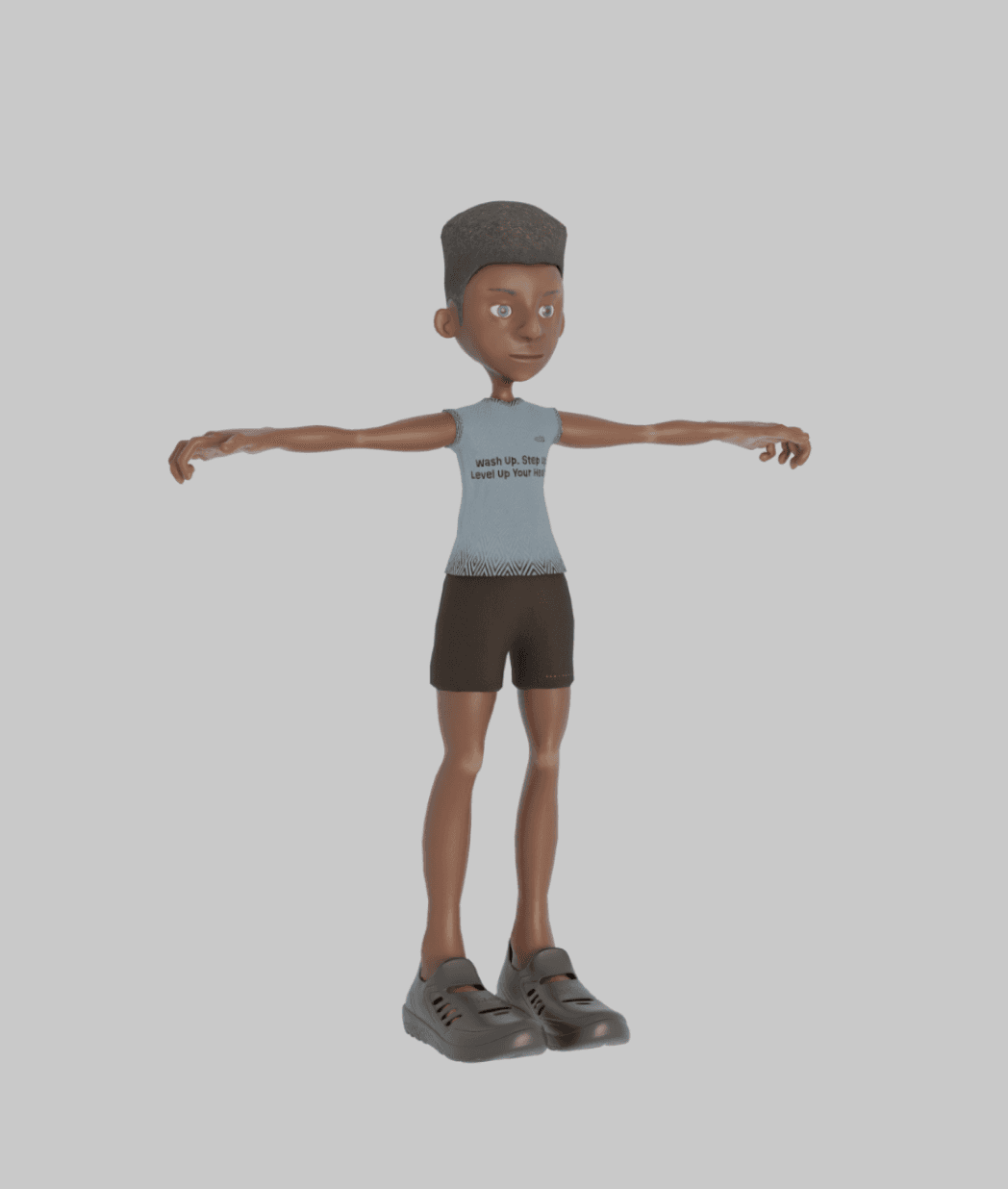
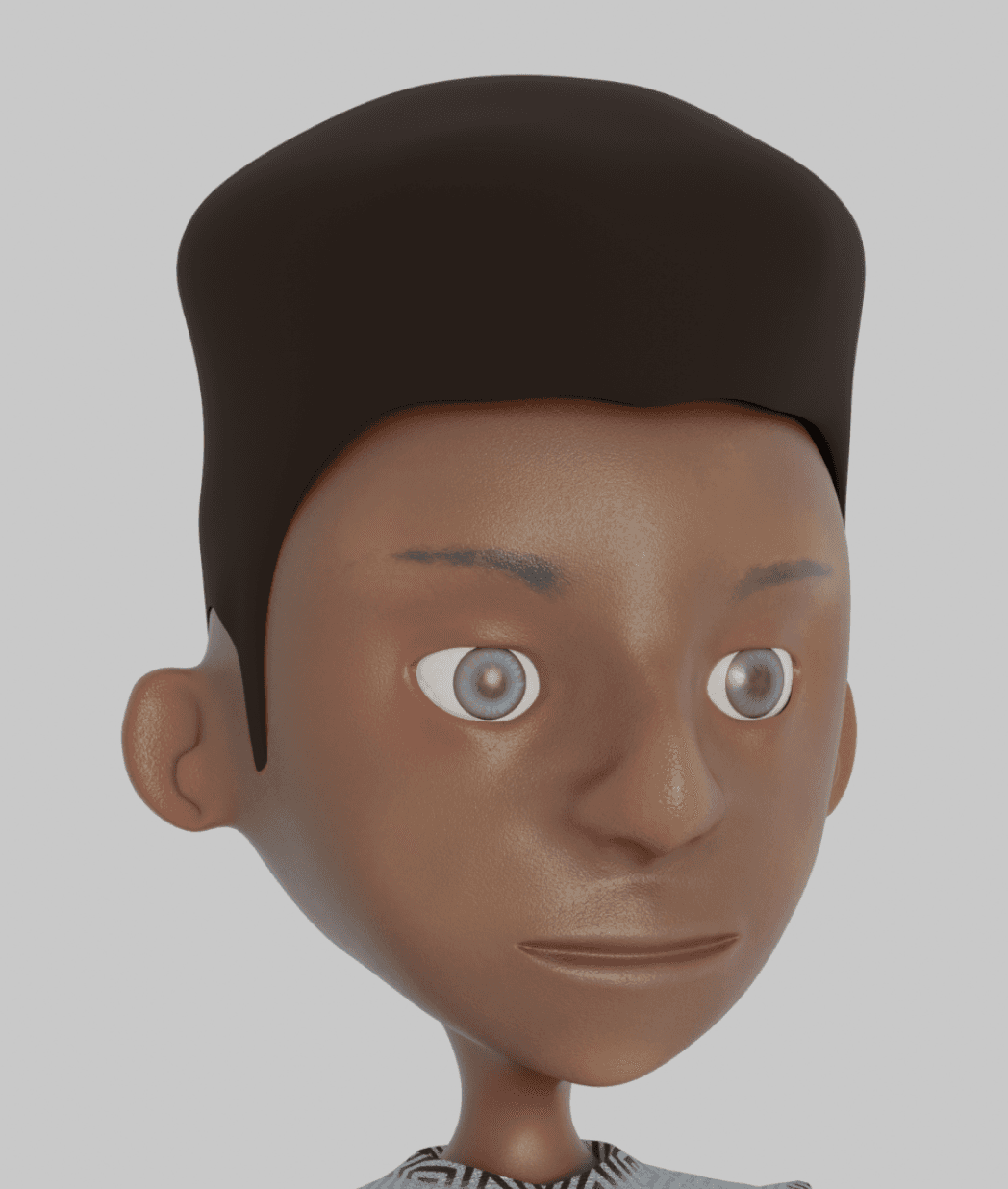
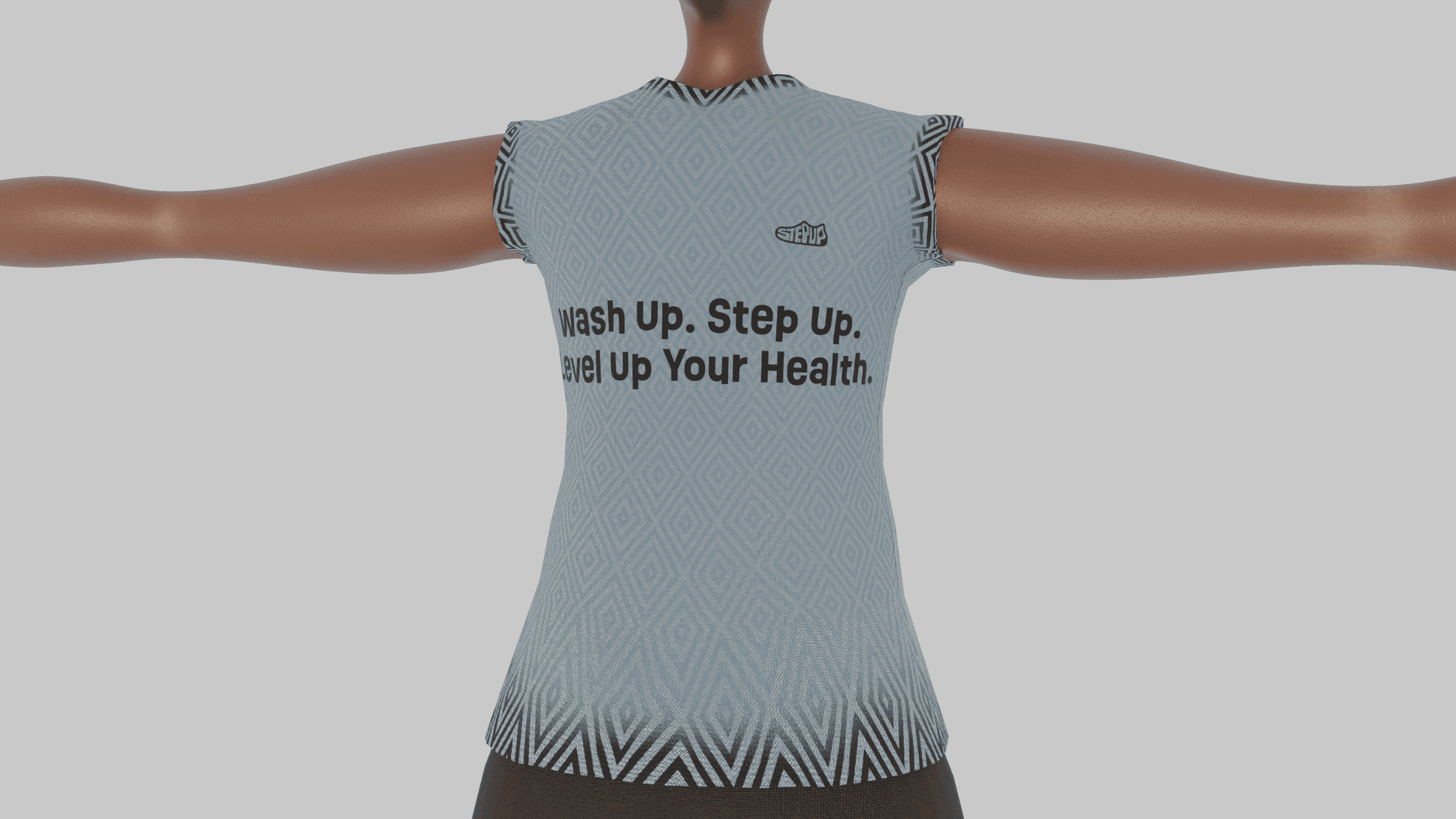
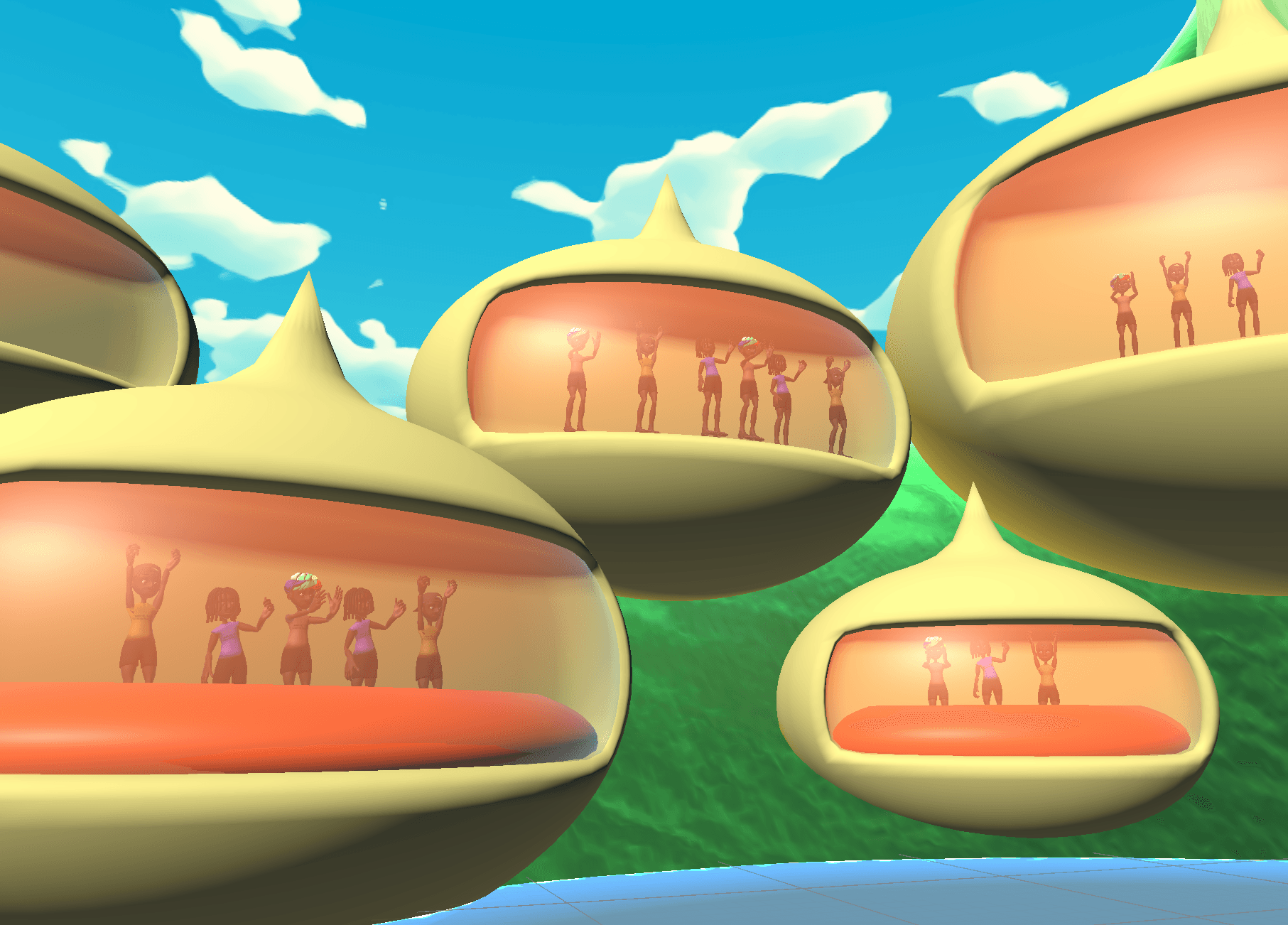
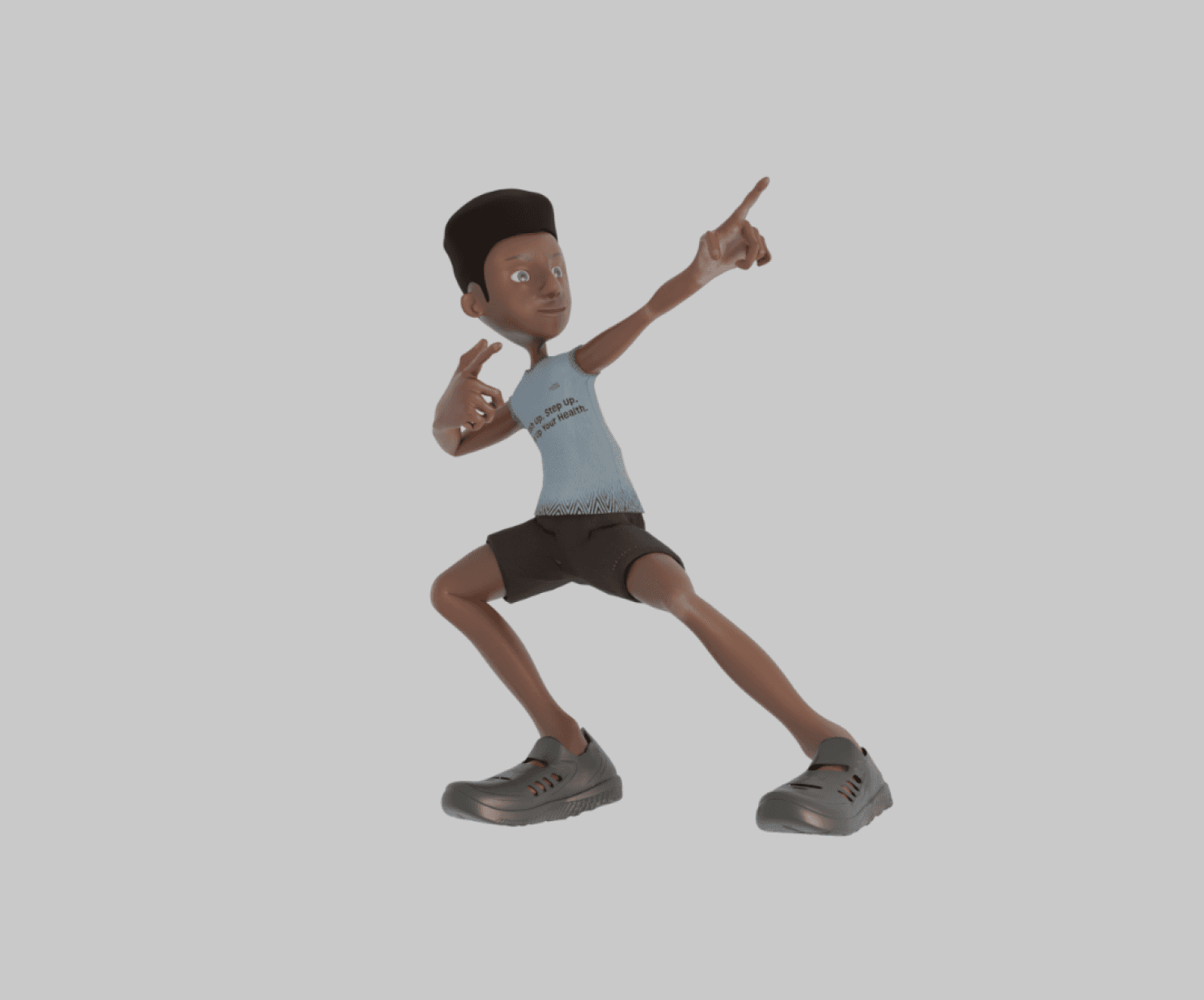
Since our primary audience is children across various African regions, we designed the character, clothing, and environments with cultural relevance in mind. The avatar’s hairstyle and athletic silhouette reflect styles commonly seen in local communities. Patterns on the clothing are inspired by African textiles, while the game world incorporates vibrant colors, celebratory crowds, and familiar landscapes. These design choices ensure that players can see themselves represented in the game, strengthening emotional connection and increasing engagement.
Culturally Relevant Design
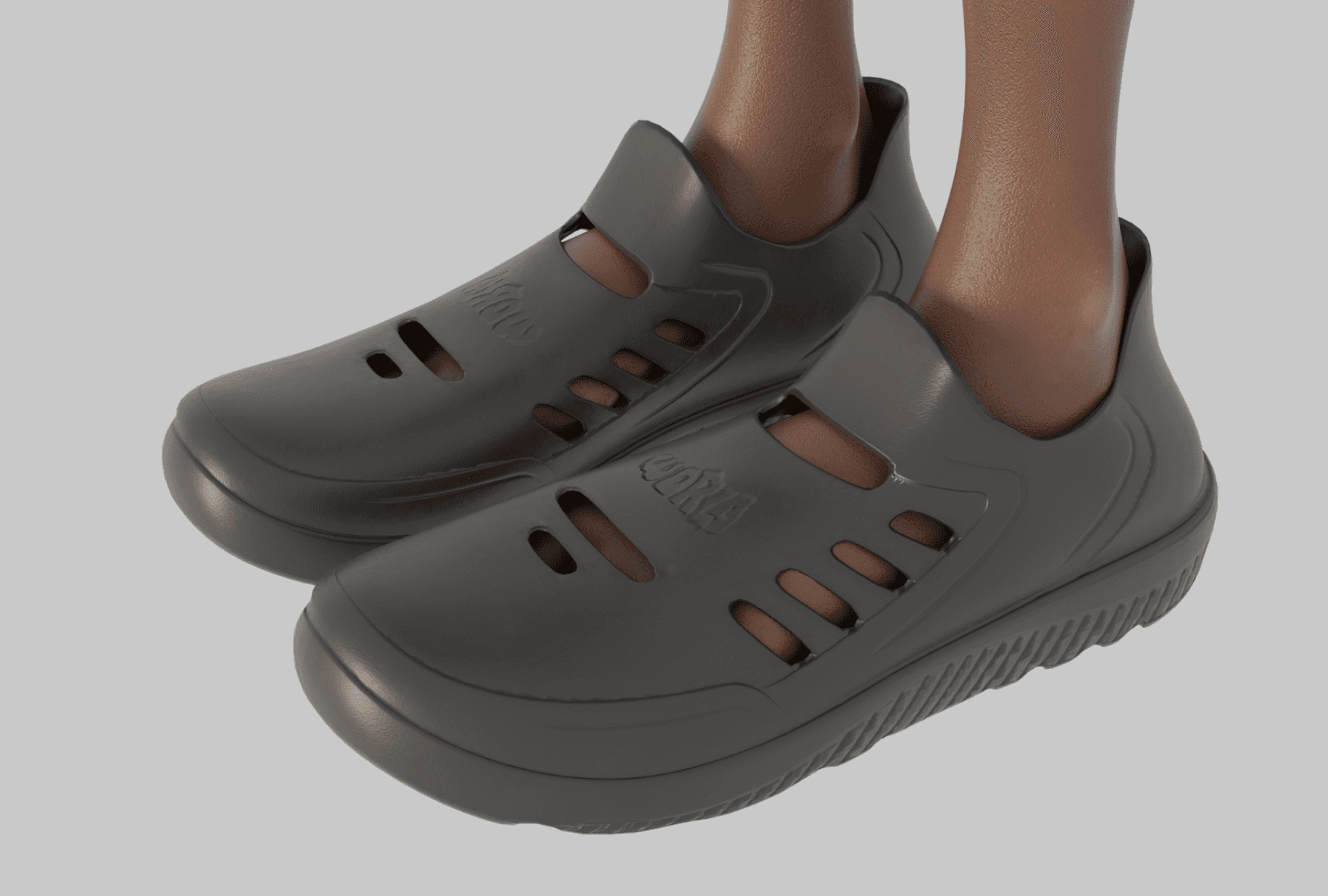
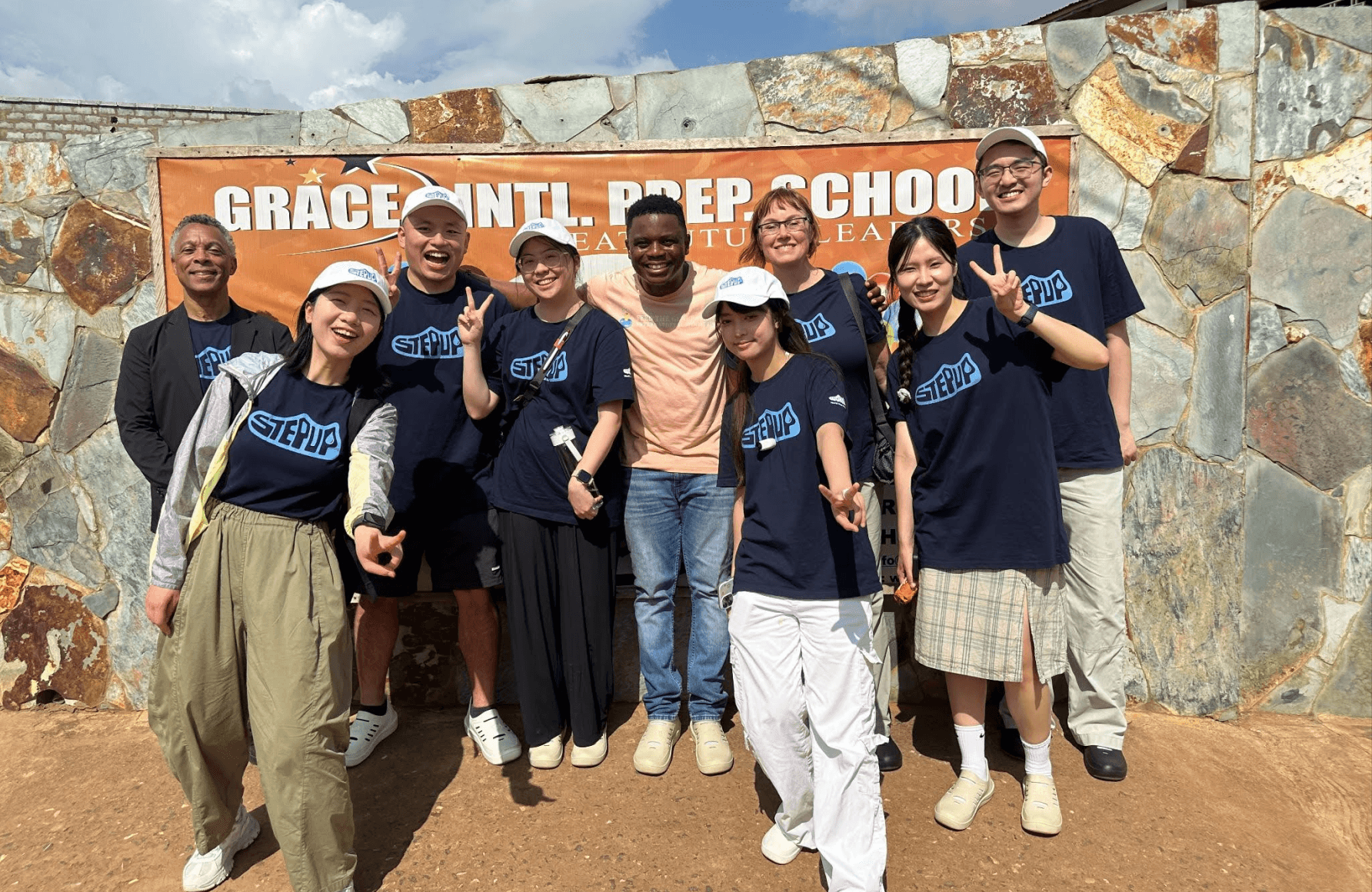
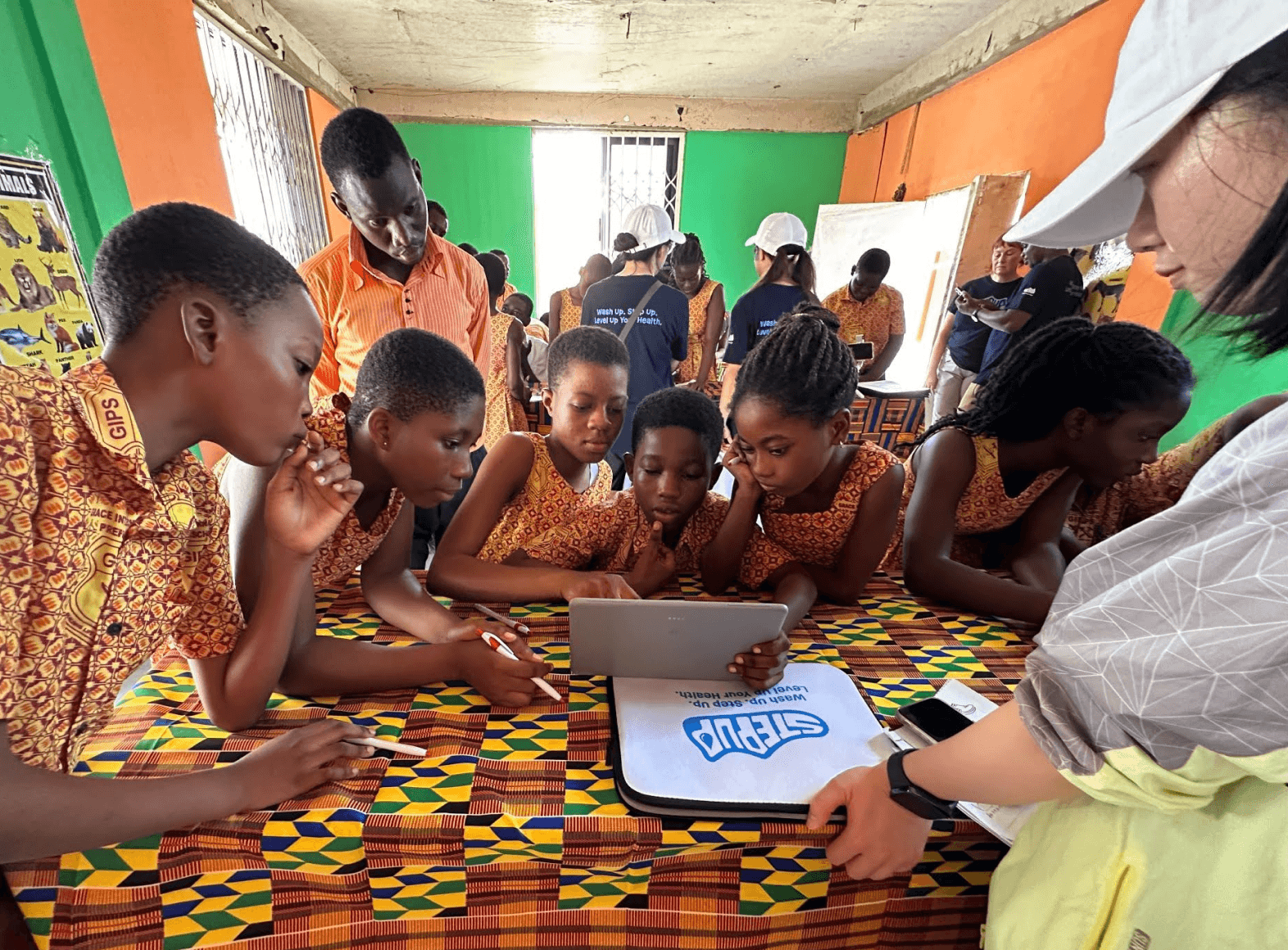
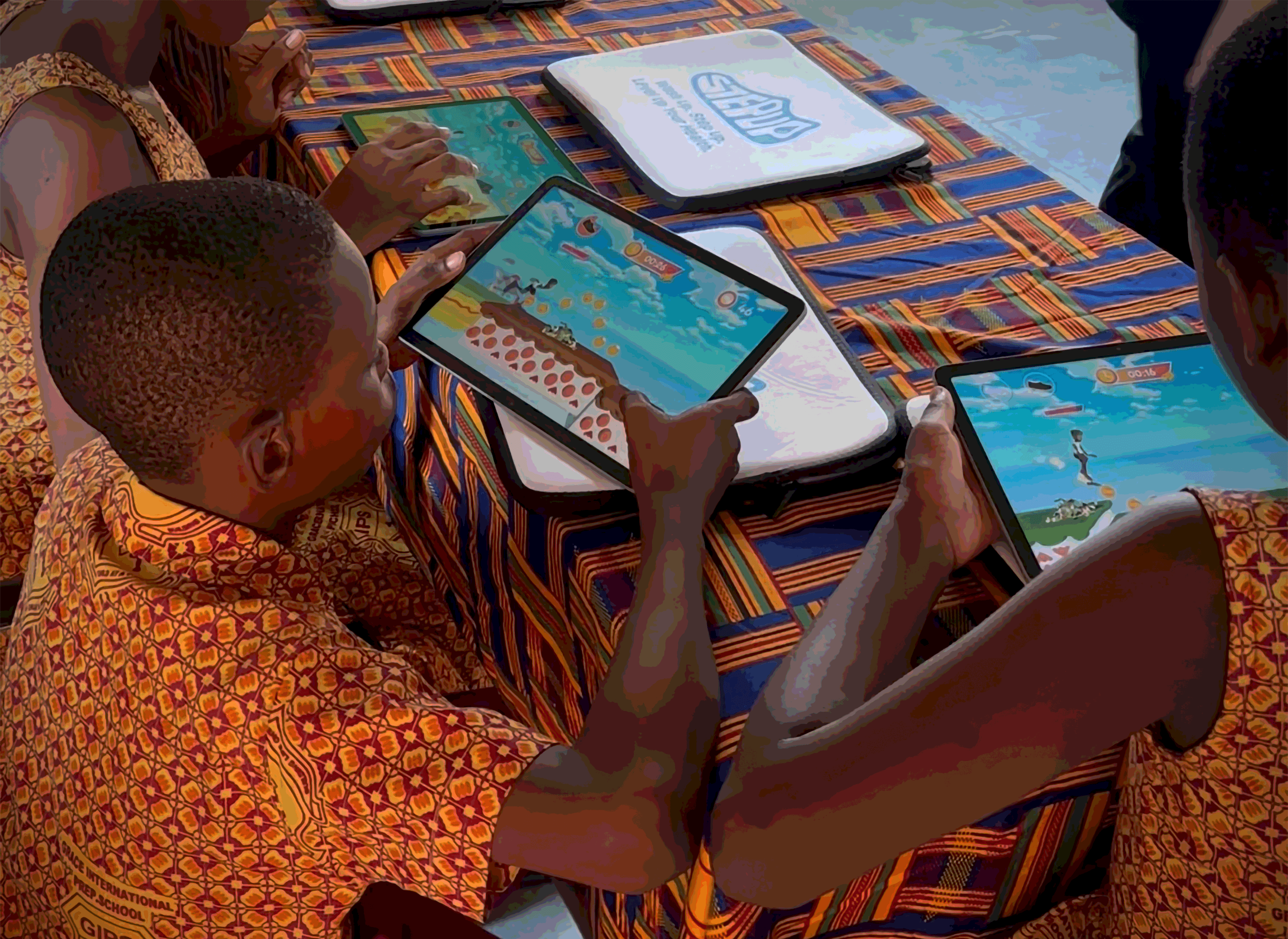
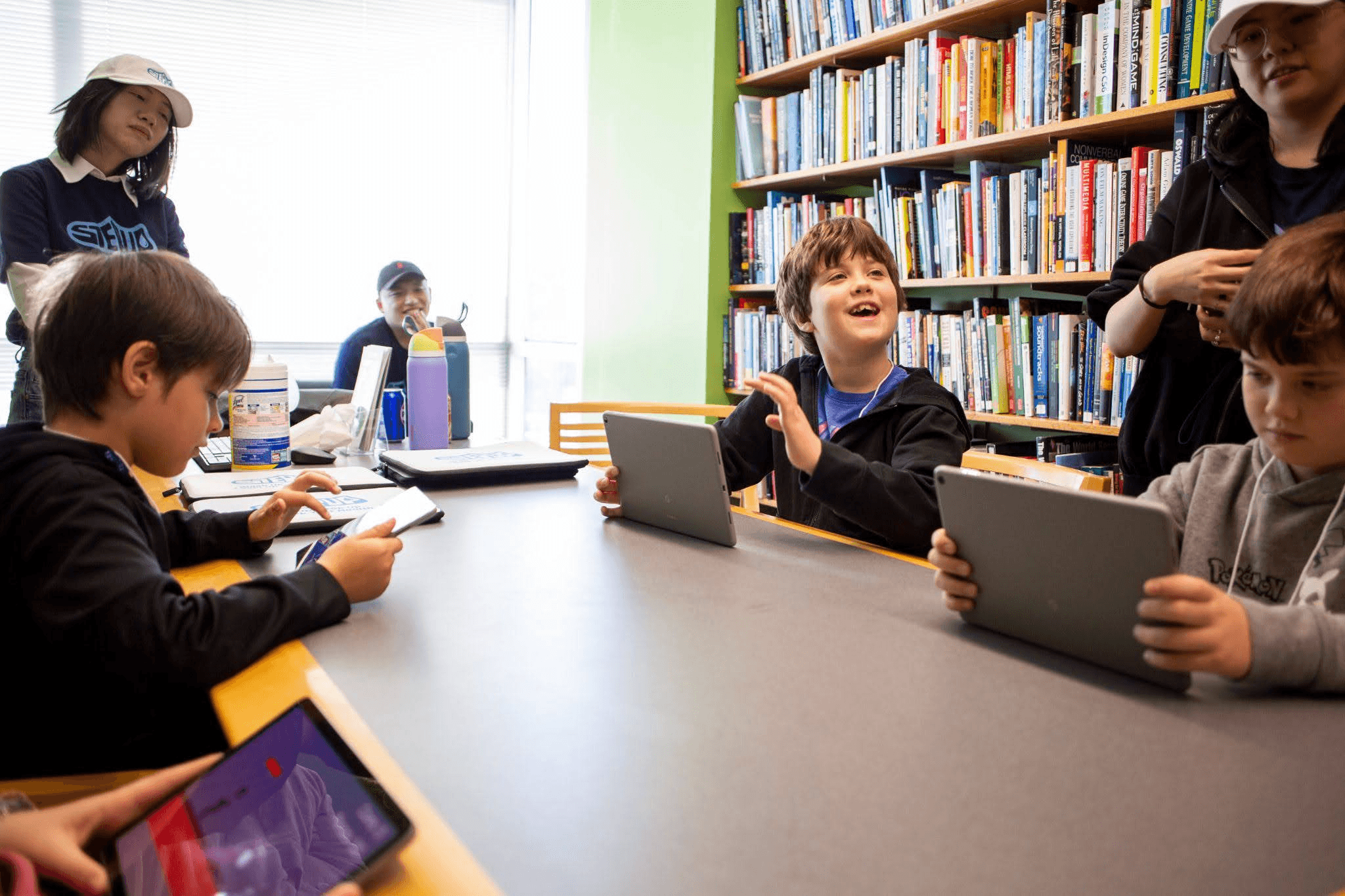
We had an incredible opportunity to travel to Ghana and connect directly with the students at the heart of the Hygiene Hero Cup’s mission. This trip wasn’t just about testing the game—it was about creating an experience and truly understanding our audience. Over three consecutive days, we met six classes of around 30 students each, totaling 190 students. We divided each class into three smaller groups of ten and provided two tablets per group. The students quickly began discussing the game with one another, eagerly taking turns and naturally sharing the tablets. Their enthusiasm filled the room, creating a highly collaborative and energetic playtesting environment.
We had an incredible opportunity to travel to Ghana and connect directly with the students at the heart of the Hygiene Hero Cup’s mission. This trip wasn’t just about testing the game—it was about creating an experience and truly understanding our audience. Over three consecutive days, we met six classes of around 30 students each, totaling 190 students. We divided each class into three smaller groups of ten and provided two tablets per group. The students quickly began discussing the game with one another, eagerly taking turns and naturally sharing the tablets. Their enthusiasm filled the room, creating a highly collaborative and energetic playtesting environment.
Final Playtest in Ghana
IMPACT
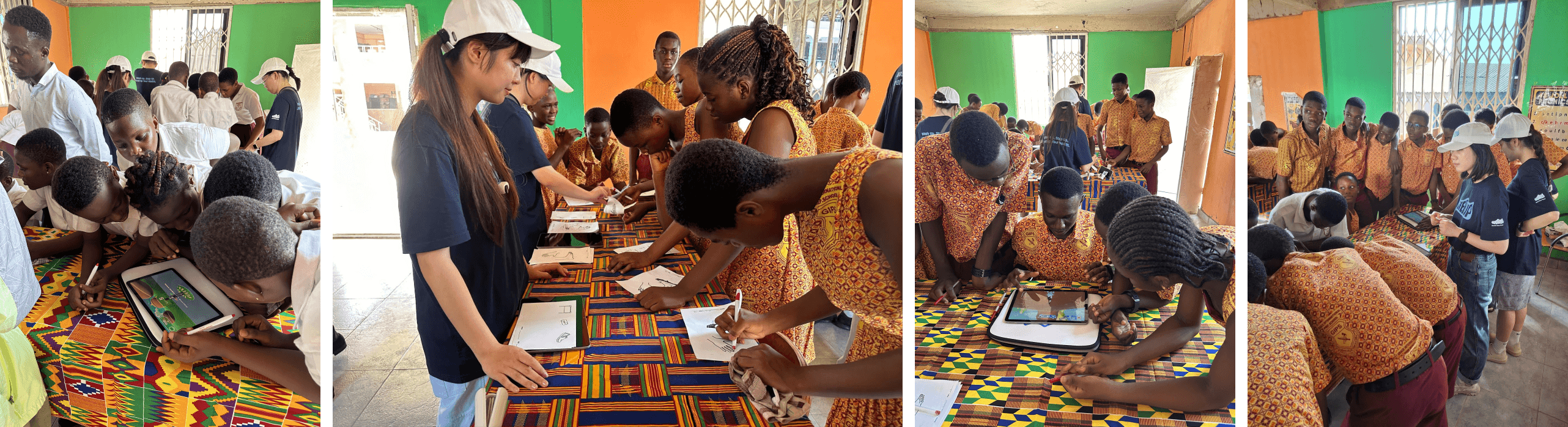
To run the playtesting as effectively as possible, we designed a lesson plan that transformed the session into more than just gameplay. Our goal was to create a complete experience—a mini hygiene workshop—that allowed us to both engage students and collect meaningful data to improve the game. The structure included activities before, during, and after gameplay.
Lesson Plan
Pre
Activity
Post
Activity
Co-Design
Activity
Gameplay
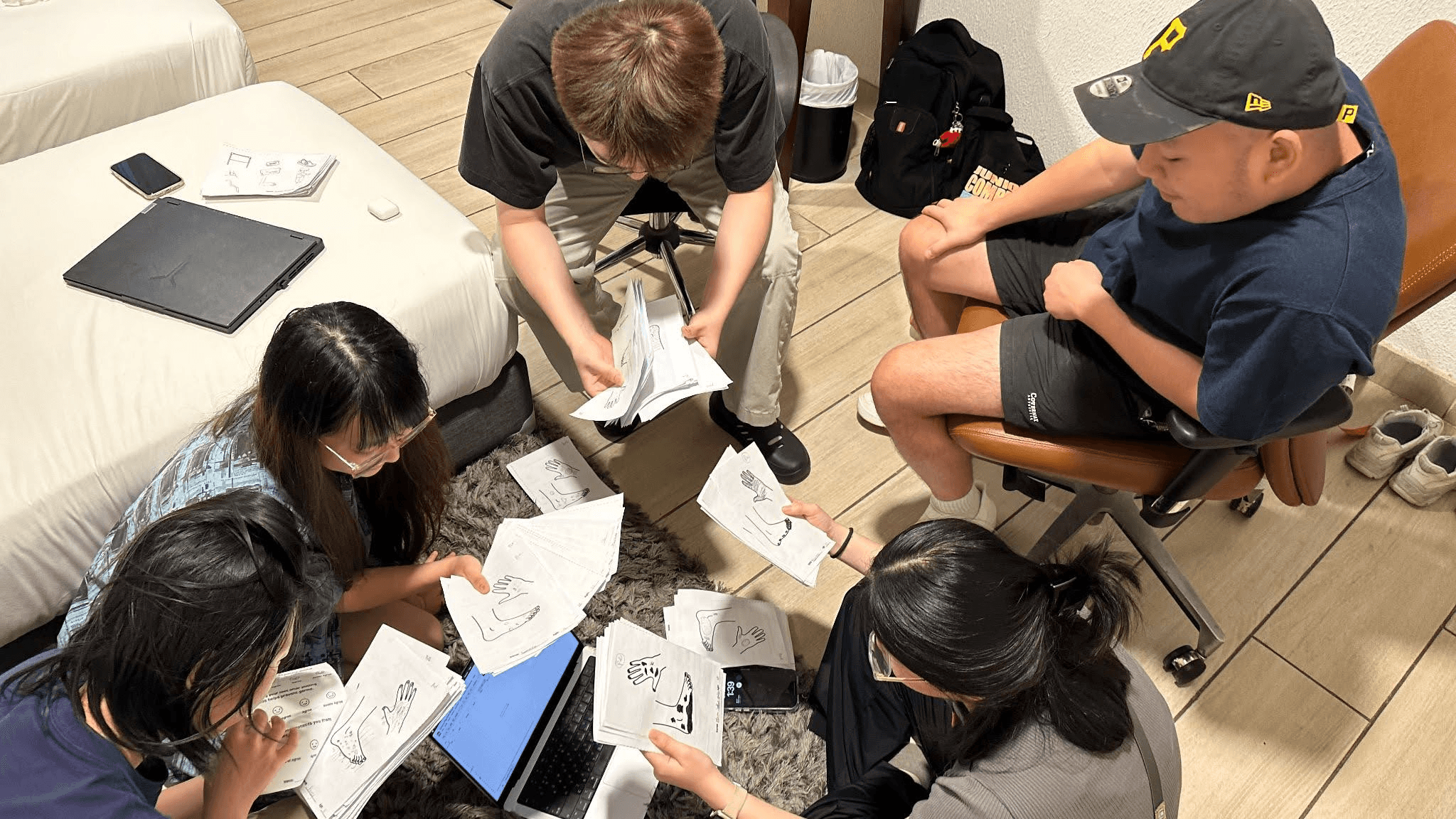
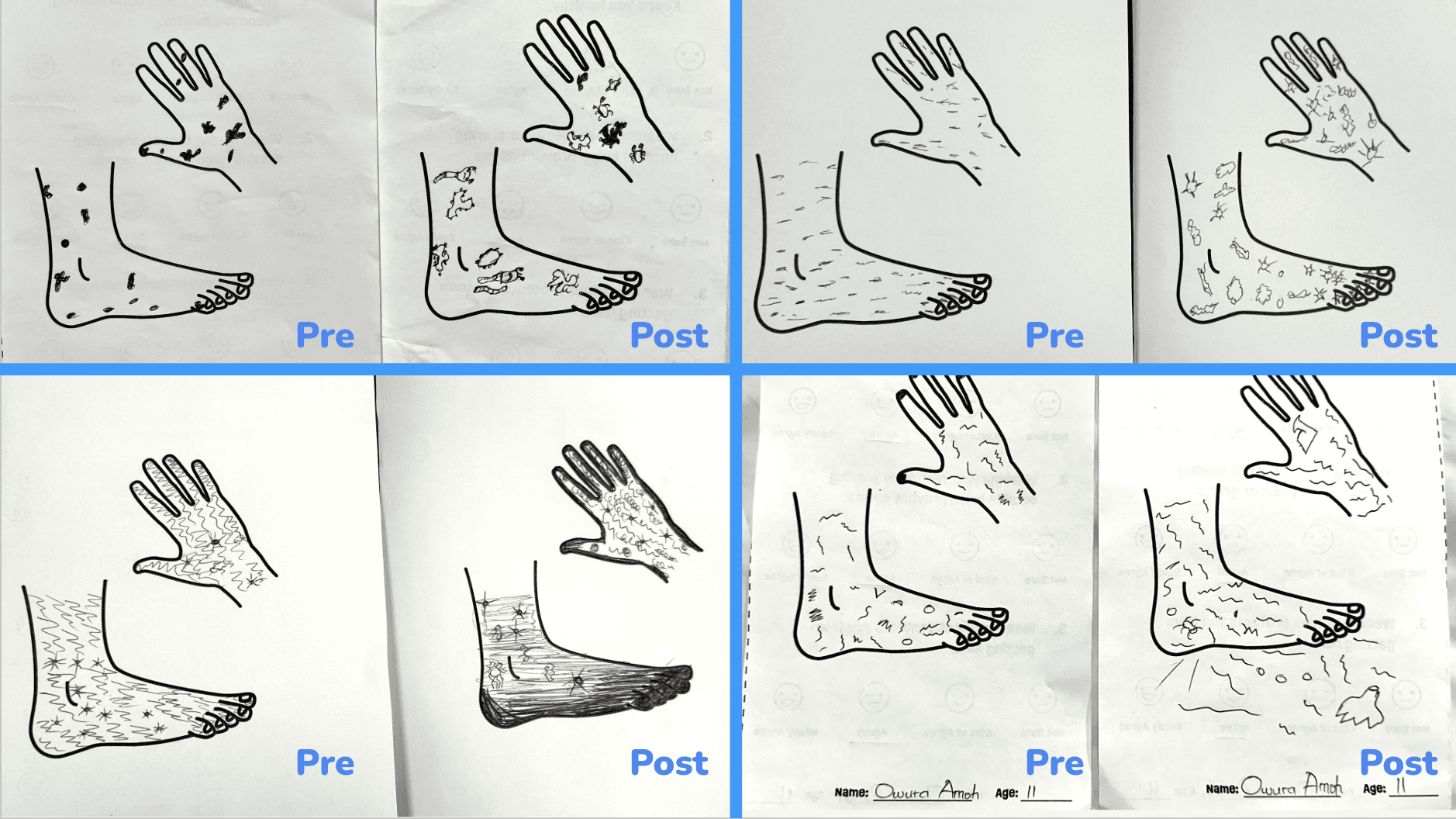
We also compared the students’ hand and foot drawings, which provided an immediate visual indicator of what they learned. From the post-activity drawings, we noticed a clear increase in the number of germs they illustrated, along with more detailed shapes and textures. This showed us that the game effectively reinforced their understanding of hygiene and the risks associated with unclean hands and feet.
Pre&Post Results Comparison
Many of the students drew objects directly related to each mini game, showing that they were actively paying attention and recalling what they experienced. Some students chose to describe their thoughts in detail, with writings.
From the post-activity drawings, we observed several clear changes that indicated learning. Students illustrated a greater number of germs overall and added more specific, detailed bacteria that resembled the models introduced in Mini Game 2. Many also demonstrated an understanding of key hygiene facts—such as recognizing that the areas between fingers and toes contain the highest concentration of germs. Some even incorporated elements from Mini Game 3 by drawing shoes on the feet with hazard objects underneath, showing their awareness of ground dangers and the protective role of footwear.
From the codesign activity drawings and writings from students, they reflected the key themes of each game, along with imaginative new elements they believed could be added. Some students chose to accompany their visuals with detailed written explanations, describing their takeaways from each mini game, offering suggestions for the game design, and even demonstrating accurate comprehension of the learning goals—for example, listing all five steps of handwashing from Mini Game 1.
Co-design Activity Results
Takeaways - Hand&Foot Drawing Activity
Takeaways - Codesign Activity
Seeing the impact firsthand reaffirmed our belief that Hygiene Hero Cup has the potential to create meaningful change globally. The game will become the next component of the Wash & Wear Program in World Shoe Fund’s future distributions, with long-term plans to host it on their own platform for research and outreach. There is also potential for broader access through public platforms like the Google Play Store. Watching our idea become a game—and seeing that game resonate with students across regions—has shown us how thoughtful design can inspire healthier habits and brighter futures.
Key Takeaways